Wednesday, September 16, 2009
New wreck dive off Comino, Malta
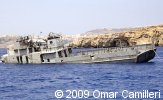 There is a new dive waiting off the coast of Comino: former Armed Forces of Malta (AFM) Patrol Boat P31. The wreck is 52 m long and lies at 18 m.
The Malta Tourism Authority co-ordinated the scuttling of the former Patrol Boat to add to the number of underwater attractions for scuba divers visiting Ċirkewwa and Comino.
The Parliamentary Secretary for Tourism, the Hon. Dr Mario de Marco said that Malta has nine wrecks being purposely scuttled vessels for diving; and that the P31's scuttling is part of a two-phase project to scuttle two patrol boats. The first was the P29 which was scuttled in Ċirkewwa in August 2007.
He also referred to the process of the scuttling which included an Environmental Impact Assessment carried out to assess the environmental impact of this project. As a result of the studies, the scuttling location was shifted by approximately 30 metres to avoid important sea grass beds.
He added that the Maltese Islands last year attracted almost 55,000 divers with the majority hailing from the UK, Germany and Italy.
Malta is renowned as a diving destination, with two of its dive sites making it into the list of the top ten European dive sites, as voted for by SCUBA Travel readers.
Further Information:
Malta Tourism Authority
AFM Video of the Scuttling
What do you think of this news item? Join a discussion.
Labels: Europe, Malta and Gozo, Mediterranean, wrecks

Tuesday, March 17, 2009
97% of Divers disturb seabed: Males worst offenders
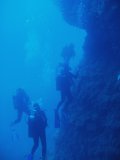 Most SCUBA divers disturb the seabed, Spanish researchers say. A study published in the ICES Journal of Marine Science found that nearly 97% of divers in marine protected areas (MPAs) made contact with the bottom. Inexperienced, male divers carrying a camera or torch were the worst offenders.
Creating a marine protected area tends to increase diving in that vicinity. Scientists from the University of Alicante studied the behaviour of divers in marine protected areas, the effects of diving on the natural environment and the characteristics that influence diver behaviour. They found that impacts caused by recreational scuba activity vary widely among different divers.
The scientists followed a total of 181 recreational divers in Mediterranean MPAs, recording the contacts they made with the seabed and the effects produced. They also made notes on the features of the dive. Their observations revealed that 175 of the divers observed (96.7%) made at least one contact with the seabed. Flapping was the most frequent type of contact, and the main damage by this action was to raise sediment.
Contact with the seabed was greater for males than for females, inexperienced divers than for experienced divers, camera or dive light users than for non-users, and divers unaccompanied by a dive leader or who had not been briefed about avoiding seabed contact before undertaking a dive than for accompanied or briefed divers.
The research team hopes that a greater understanding of the causes of harmful behaviour may be useful for stricter management, reducing diving damage and assuring the sustainability of diving in marine protected areas.
Journal Reference:
Luna, B., Valle Pérez, C., and Sánchez-Lizaso, J. L. 2009. Benthic impacts of recreational divers in a Mediterranean Marine Protected Area. – ICES Journal of Marine Science, 66: 000–000.
--
What do you think of this news item? Join a discussion.
Labels: Mediterranean, research, SCUBA diving, SCUBA News, SCUBA Travel
Wednesday, March 11, 2009
Survey Reveals Top 10 Dive Sites in Europe
Europe boasts some world class dive sites, with great visibility and masses of underwater life. In a recent poll of SCUBA Travel readers, these were voted the ten best dive sites in Europe. Disagree? Then cast your vote.
- The Zenobia, Cyprus
The pristine wreck of a huge ferry. Lying on its port side, the wreck starts at about 15 m and descends to 42 m. Fabulous dive. Possibly the best shipwreck dive in the world in recreational depths. 20 m plus visibility and some great swim-throughs. Needs several dives to see anything like all of it.
- Blue Hole, Gozo
A beautiful sharp drop off into the blue hole with what seems like limitless visibility and literally feels like you are on the very edge of the world. A most extraordinary dive.
- Cirkewwa, Malta
Features the wreck of the Rozi MV as well as stunning underwater topography. Visibility is very good and there iss ea life in abundance: barracuda, morays, octopus, cuttlefish and even dolphins.
- Booroo, Isle of Man
The Burroo, with its extremely diverse and plentiful marine life offers a truly magnificent dive. In fact, in areas exposed to the fast flowing current, it is something of a challenge to find a single square centimetre of bare bedrock, so abundant is the life here.
- Blockship Tabarka, Scapa Flow, Scotland
This shallow 18 m dive is a real beauty. One of the block ships scuttled to prevent submarine attack during WW2. Covered in life, a beautiful place. Worth the trip and the one of surprises of Scapa.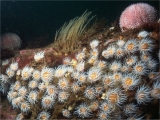
- Diamond Rocks, Kilkee, Ireland
Claimed to by on a par with the famous Yongala. It is a cold water dive off Ireland's west coast. The bay is fairly sheltered and is teaming with life. The terrain is full of rocks and gullies and the water is really clear.
- Eddystone Reef, England
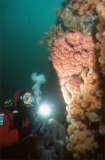
12 miles off Plymouth, England. The reef is from 8 to 60 m. Encrusted with jewel anemones and with the remains of ancient wrecks, including a large 17th century anchor. Stunning.
- Secca della Columbara, Italy
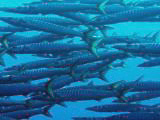 One of the best dives in the Mediterranean. It features a steep, beautifully-decorated, wall; large shoal of barracuda; grouper; giant amberjacks and a wreck. The wreck is a 74 m ship which was carrying slabs of marble. It sank in 2005 and rests at 20 m in two parts.
- Fanore, Ireland
Shore dive in crystal clear Atlantic water with abundant fish.
- Chios island, Greece
Small undersea caves and paths between impressive rocks, colourful reefs and vertical walls.
What do you think of this news item? Join a discussion.
Labels: Europe, Greece, Ireland, Italy, Malta and Gozo, Mediterranean, SCUBA diving, SCUBA Travel, UK
Monday, February 09, 2009
EU launches shark protection plan
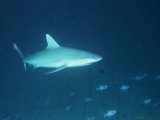 The European Commission has launched a Plan of Action for the Conservation and Management of Sharks. The aim is to rebuild shark stocks and to set down guidelines for the sustainable management of the fisheries, including where shark are taken as by-catch. The plan also hopes to increase knowledge of shark stocks and shark fisheries.
European Commissioner for Maritime Affairs and Fisheries Joe Borg commented: "Sharks are very vulnerable to over-exploitation and the consequences of depleting their numbers may have very serious consequences not only for sharks but also for marine ecosystems and for fishermen themselves. That is why we have set out a plan of action which will both establish a more precautionary approach to managing fisheries where sharks are caught, and support the substantial research still needed to understand fully the role sharks play in the life of our oceans and the impact which fishing may have on them."
The Action Plan includes measures to improve data collection and to further reinforce control of the shark finning ban, which came into force in EU waters, and for all EU vessels wherever they fish, in 2003.
The Plan covers all cartilaginous fish – not only sharks, but also skates, rays and chimaeras, which make up over 1,000 species in total. They are found throughout the world, and particularly in the Northern Atlantic Ocean, where more than 50% of shark catches by EU vessels are made. Shark fisheries have grown rapidly since the mid-1980s, driven by an increased demand for shark products (fins in particular). But these species are especially vulnerable to overfishing, since they are long-lived, slow to reach sexual maturity, have long gestation periods and a low fertility rate. A recent study by the International Union for the Conservation of Nature suggests that as many as one-third of the shark species caught in EU waters are currently threatened by excessive fishing pressure. Despite the fragility of these stocks, and their growing importance to the EU fleet, EU shark fisheries have never been managed systematically.
Environmentalist organisations have broadly welcomed the plan. Steven Broad, Director of TRAFFIC, the wildlife trade monitoring network, commented "The commitment to shark conservation is to be commended, although TRAFFIC and WWF are deeply concerned that some of the measures will not be implemented for considerable periods".
Although the Plan calls for countries to collect information on sharks caught, this will be on a voluntary basis.
TRAFFIC and WWF also called on the EU to allocated adequate resources to ensure the Plan could be properly implemented, and for the Council and the European Parliament to adopt the plan without diluting the proposed measures or extending the period of implementation.
"Many of these species are already threatened with extinction. WWF and TRAFFIC are dismayed that the plan lacks a solid commitment to seek mandatory collection of data on shark catch—a critical element if the EU is to succeed in the conservation of these species," said Dr Susan Lieberman, WWF International's Species Programme Director.
Shark Alliance Policy Director, Sonja Fordham, said “The release of the long-awaited EU Shark Plan represents a great step forward for the conservation of sharks in European waters and beyond. The Plan’s commitments to science-based fishing limits, endangered species protection, and a stronger finning ban are essential to securing a brighter future for some of Europe’s most vulnerable and neglected animals.”
“The success of the EU Shark Plan depends on prompt, follow-up proposals from the Commission and cooperation from Member States in ensuring improvements are accepted and enforced,” added Fordham. “We urge all EU Fisheries Ministers to actively support timely implementation of the Shark Plan in line with scientific advice and the precautionary approach.”
Sharks are targeted by UK, French, Spanish and Portuguese fishermen; shark tails and meat are used to prepare "caldeirada" or "Schillerlocken" and shark meat is served in restaurants across Europe, and in the UK in traditional fish-and-chip shops.
Further Reading:
European Commission Fisheries
What do you think of this news item? Start a discussion.
Labels: environment, Europe, Mediterranean, SCUBA News, sealife, sharks
Tuesday, December 09, 2008
Egypt plans world's first underwater museum
A new museum, the first of its kind, is to be built partly above and partly under water. The submerged part of the complex will enable visitors to see archaeological remains on the Egyptian seabed. Other artefacts recovered from the Bay of Alexandria and adjacent sites will be presented in exhibition spaces above water.
UNESCO has established an International Scientific Advisory Committee to help lay the ground for an innovative underwater museum in the Bay of Alexandria, Egypt, where major archaeological remains are to be found, including Cleopatra’s Palace and the fabled Alexandria Lighthouse, or Pharos.
The Government of Egypt’s plan to build an underwater museum comes amidst growing recognition of the importance of underwater cultural heritage. Eighteen countries have now ratified the UNESCO Convention on the Protection of the Underwater Cultural Heritage, which will enter into force shortly, three months after its ratification by the 20th State.
Underwater cultural heritage preservation is also the subject of a short new documentary film, produced by UNESCO’s Culture Sector. The film, focusing on UNESCO’s Convention on the Protection of the Underwater Cultural Heritage, highlights the importance of saving submerged cultural property which has become increasingly vulnerable to pillaging with the development of more sophisticated and affordable diving equipment.
The film, whose spectacular footage includes images from the sea off Alexandria, stresses the advantages of research and preservation of submerged archaeological sites in situ, which is also one of the objectives of the Egyptian museum project. You can watch the film at http://www.unesco.org/culture/en/underwater/film/
For more information see UNESCO's web site.
UNESCO has established an International Scientific Advisory Committee to help lay the ground for an innovative underwater museum in the Bay of Alexandria, Egypt, where major archaeological remains are to be found, including Cleopatra’s Palace and the fabled Alexandria Lighthouse, or Pharos.
The Government of Egypt’s plan to build an underwater museum comes amidst growing recognition of the importance of underwater cultural heritage. Eighteen countries have now ratified the UNESCO Convention on the Protection of the Underwater Cultural Heritage, which will enter into force shortly, three months after its ratification by the 20th State.
Underwater cultural heritage preservation is also the subject of a short new documentary film, produced by UNESCO’s Culture Sector. The film, focusing on UNESCO’s Convention on the Protection of the Underwater Cultural Heritage, highlights the importance of saving submerged cultural property which has become increasingly vulnerable to pillaging with the development of more sophisticated and affordable diving equipment.
The film, whose spectacular footage includes images from the sea off Alexandria, stresses the advantages of research and preservation of submerged archaeological sites in situ, which is also one of the objectives of the Egyptian museum project. You can watch the film at http://www.unesco.org/culture/en/underwater/film/
For more information see UNESCO's web site.
Labels: Mediterranean
Thursday, September 11, 2008
Mediterranean tuna management an "international disgrace"
 According to environmental groups, an independent review panel of international fisheries experts has branded the management of the Mediterranean bluefin tuna fishery an "international disgrace" in its conclusions, published this week.
The body responsible for the conservation of tunas and tuna-like species in the Atlantic Ocean and adjacent seas is the International Commission for the Conservation of Atlantic Tunas (ICCAT). The independent panel was commissioned by this very organisation to review its performance following concerns raised by the international community about the management of tuna fisheries resources.
In a very strong and direct recommendation, the Panel asks for "the suspension of fishing of bluefin tuna in the eastern Atlantic and Mediterranean until countries fully comply with ICCAT's recommendations on bluefin". Such a closure is seen by the Panel as "the only way to stop the continuation of what is seen by observers and by other contracting party countries as a travesty in fisheries management".
The Panel found that the management of the Mediterranean bluefin tuna fisheries was "unacceptable and not consistent with the objectives of ICCAT", such as the objective of guaranteeing that fish populations do not dwindle to unsustainable levels.
In addition to immediate suspension of the fishery, the Panel also recommended the immediate closure of all known bluefin tuna spawning grounds, at least during known spawning periods. This is in line with Greenpeace demands for the closure of the fishery and the creation of no-take marine reserves to protect crucial breeding areas in the Mediterranean Sea. Also needed are minimum size limits to allow the species to breed before being caught, fishing and farming capacities scaled back to sustainable quota levels, and the elimination of pirate fishing.
The Panel attributed the failure of ICCAT management largely due to the lack of implementation of existing regulations by its contracting party countries. However, some problems lie deeper than enforcement of rules. The review drew attention not only to the illegal catch, but also to the fact that the quota set by ICCAT was 29,500 tonnes - almost twice the 15,000 limit recommended by its own scientific committee. As the Panel put it, "it is difficult to describe this as responsible fisheries management and it reflects negatively not only on ICCAT but on all tuna RFMOs"(3).
In November, ICCAT members will review the current bluefin tuna management plan. Pressure groups Greenpeace and the WWF are demanding that they follow the recommendations of the Panel and close the fishery until capacity is decreased, spawning grounds protected and compliance guaranteed.
“Such staggering conclusions from independent experts only reinforce what WWF has been saying for years – this is a fishery grossly out of control, and if the fishery is not closed now pending radical management overhaul, this majestic species may be confined to the history books,” says Dr Sergi Tudela, Head of Fisheries at WWF Mediterranean.
"Fisheries Ministers are failing to protect single species, let alone marine ecosystems. What kind of management organisation ignores the advice of its own scientists and set quotas that condemn the very species it is responsible for??" asked Sebastian Losada, Greenpeace Spain oceans campaigner. "This report signals that it is time for ICCAT members to take responsibility for the fishery that has brought tuna to near-collapse or be relieved of its management altogether.
What do you think of this news item? Start a discussion.
Bookmark with: del.icio.us | Digg | Newsvine | NowPublic | Reddit
|
 Slashdot It! | Facebook | StumbleUpon
 --
Subscribe to SCUBA News (ISSN 1476-8011) for more free news, articles, diving reports and marine life descriptions - http://www.scubatravel.co.uk/news.html

Labels: environment, Mediterranean
Thursday, June 19, 2008
Mediterranean Sharks Declining Fast
 A new scientific study has concluded that sharks in the Mediterranean Sea have declined by more than 97 percent in abundance and “catch weight” over the last 200 years.
The findings of the study published in the journal Conservation Biology, suggest several Mediterranean shark species are at risk of extinction, especially if current levels of fishing pressure continue. Study lead author Francesco Ferretti and his colleagues are concerned that the declines in sharks may have implications for the broader Mediterranean marine ecosystem.
Ferretti said: “The loss of top predators such as sharks in other sectors of the Atlantic has resulted in changes to the ecosystem. These changes are unpredictable and poorly understood but given the decline in Mediterranean shark numbers, there is cause to be seriously concerned about the effects this could have.”
Forty-seven species of sharks live in the Mediterranean Sea, of which 20 are considered top predators.
The study authors only had enough information to assess the status of five of the twenty large predatory shark species in the Mediterranean. Of those analysed, almost all of the large sharks have decreased in abundance because of unintended capture in open ocean fisheries, targeted shark fishing, and human population pressure in coastal areas. Sharks are especially vulnerable to overfishing and slow to recover from depletion because they generally grow slowly, mature late and produce few young.
The mean size of sharks caught in the Mediterranean is among the lowest in the world. The study reveals that size and weight declines over time indicate that more young and immature sharks are being caught.
There are currently no catch limits for commercially-fished shark species in the
Mediterranean Sea. A comprehensive monitoring program for fisheries has been difficult to implement in the Mediterranean because of the artisanal (small and localized) nature of its fisheries and the large number of countries bordering the sea.
Only five species of sharks offered sufficient information for analysis, including the blue shark, one thresher shark species, two mackerel shark species and one hammerhead shark species. The blue, smooth hammerhead and thresher sharks were classified as “Vulnerable” according to the latest IUCN-World conservation Union Red List Criteria for extinction risk. Two mackerel sharks, porbeagle and shortfin mako, were classified as “critically endangered”. Many other large sharks are classified as “Data Deficient”.
To view a summary of the Conservation Biology paper, visit:
http://www.lenfestocean.org/publications/ferretti_med_sharks.html
-
What do you think of this news item? Start a discussion.
Bookmark with: del.icio.us | Digg | Newsvine | NowPublic | Reddit
|
Slashdot It! | Facebook | StumbleUpon --
Subscribe to SCUBA News (ISSN 1476-8011) for more free news, articles, diving reports and marine life descriptions - http://www.scubatravel.co.uk/news.html
Labels: environment, Mediterranean, research, sharks
Thursday, March 13, 2008
Mediterranean leaders urged to save tuna
Bluefin tuna populations have declined alarmingly over the past few decades due to overfishing fuelled by an increasingly expensive industry.
A new WWF report shows that the international fleets hunting this species to extinction have twice the fishing capacity of current quotas and are netting more than three and a half times the catch levels recommended by scientists to avoid stock collapse.
"WWF's new report uncovers the absurdity of a system long out of control, where hundreds of hi-tech boats are racing to catch a handful of fish," says Dr Sergi Tudela, Head of Fisheries at WWF Mediterranean.
"It is crazy - the numerous new fleets are so modern and costly that fishermen are forced to fish illegally just to survive - and worse still they are fishing themselves out of a job," added Tudela.
To keep fishing capacity within the 2008 legal catch limits imposed by the International Commission for the Conservation of Atlantic Tunas (ICCAT), the Mediterranean fleet would need to shed 229 vessels - almost a third of the current 617-vessel fleet. Reducing fishing effort to scientifically recommended levels would require the decommissioning of 283 vessels.
WWF is calling on concerned countries to dramatically reduce capacity in this fishery as a matter of urgency ahead of the 2008 fishing season that starts at the end of April.
WWF also urges ICCAT, the body tasked with sustainably managing the fishery, to take a lead in proposing radical solutions. Until the fishery is under control and sustainably managed, WWF continues to advocate a fishing ban - and to applaud responsible retailers, restaurants, chefs and consumer groups who are boycotting Mediterranean bluefin in increasing numbers.
"The fishery is unsustainable in every way - economically, socially, and ecologically. When will the situation be brought under control? The time to act is now - while there are still bluefin tuna to save in the Mediterranean," Tudela concluded.
What can you do? If you want to buy a tin of tuna off the supermarket shelf don’t worry – you almost never find bluefin tuna in a tin. Most tinned tuna is yellowfin or skipjack. If you buy fresh tuna ask your fishmonger whether the tuna is Atlantic bluefin, and whether it comes from the Mediterranean. If it does come from the Med, don't buy it. And at the Japanese restaurant check where they source the Atlantic bluefin tuna. If it is from the Mediterranean, avoid it.
Note: the tuna caught in the Med is called "Atlantic Bluefin Tuna" (Thunnus thynnus). Don't think that because it has the word Atlantic in the name that means it was caught there.
Further Reading:
Bluefin tuna in crisis
Race for the last bluefin: Capacity of the purse seine fleet targeting bluefin tuna in the Mediterranean
-
What do you think of this news item? Start a discussion.
Bookmark with: del.icio.us | Digg | Newsvine | NowPublic | Reddit
| Slashdot It! | Facebook | StumbleUpon
--
Subscribe to SCUBA News (ISSN 1476-8011) for more free news, articles, diving reports and marine life descriptions - http://www.scubatravel.co.uk/news.html
A new WWF report shows that the international fleets hunting this species to extinction have twice the fishing capacity of current quotas and are netting more than three and a half times the catch levels recommended by scientists to avoid stock collapse.
"WWF's new report uncovers the absurdity of a system long out of control, where hundreds of hi-tech boats are racing to catch a handful of fish," says Dr Sergi Tudela, Head of Fisheries at WWF Mediterranean.
"It is crazy - the numerous new fleets are so modern and costly that fishermen are forced to fish illegally just to survive - and worse still they are fishing themselves out of a job," added Tudela.
To keep fishing capacity within the 2008 legal catch limits imposed by the International Commission for the Conservation of Atlantic Tunas (ICCAT), the Mediterranean fleet would need to shed 229 vessels - almost a third of the current 617-vessel fleet. Reducing fishing effort to scientifically recommended levels would require the decommissioning of 283 vessels.
WWF is calling on concerned countries to dramatically reduce capacity in this fishery as a matter of urgency ahead of the 2008 fishing season that starts at the end of April.
WWF also urges ICCAT, the body tasked with sustainably managing the fishery, to take a lead in proposing radical solutions. Until the fishery is under control and sustainably managed, WWF continues to advocate a fishing ban - and to applaud responsible retailers, restaurants, chefs and consumer groups who are boycotting Mediterranean bluefin in increasing numbers.
"The fishery is unsustainable in every way - economically, socially, and ecologically. When will the situation be brought under control? The time to act is now - while there are still bluefin tuna to save in the Mediterranean," Tudela concluded.
What can you do? If you want to buy a tin of tuna off the supermarket shelf don’t worry – you almost never find bluefin tuna in a tin. Most tinned tuna is yellowfin or skipjack. If you buy fresh tuna ask your fishmonger whether the tuna is Atlantic bluefin, and whether it comes from the Mediterranean. If it does come from the Med, don't buy it. And at the Japanese restaurant check where they source the Atlantic bluefin tuna. If it is from the Mediterranean, avoid it.
Note: the tuna caught in the Med is called "Atlantic Bluefin Tuna" (Thunnus thynnus). Don't think that because it has the word Atlantic in the name that means it was caught there.
Further Reading:
Bluefin tuna in crisis
Race for the last bluefin: Capacity of the purse seine fleet targeting bluefin tuna in the Mediterranean
-
What do you think of this news item? Start a discussion.
Bookmark with: del.icio.us | Digg | Newsvine | NowPublic | Reddit
|
Slashdot It! | Facebook | StumbleUpon --
Subscribe to SCUBA News (ISSN 1476-8011) for more free news, articles, diving reports and marine life descriptions - http://www.scubatravel.co.uk/news.html
Labels: fish, Mediterranean
Wednesday, September 05, 2007
Endangered Bivalve, Pinna nobilis, Recovers Off Italy but Suffers in Greece
Pinna nobilis, the giant bivalve, is endangered. Although in some places it has historically been abundant, there has been a lack of up-to-date information about its exact distribution. SCUBA divers therefore went looking for the giant mussel in the Ionian Sea, Italy.
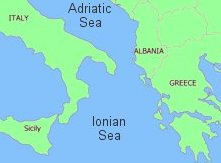
The results of the study indicate a tentative of recovery of P. nobilis population there, in spite of all the difficulties of a degraded and heavily polluted environment and the damages of illegal fishing methods.
The divers found the pinnids at depths from 3 to 16 m. Their numbers ranged from one individual in 10 hectares, to one every 1.4 hectares. (A hectare is around 2.5 acres or 0.01 square km.)
The survey method employed in this study was non-destructive and relatively simple to perform.
Pinna nobilis lives only in the Mediterranean Sea (which encompasses the Ionian Sea). It likes seagrass meadows and grows up to 120 cm. It sticks up out of the sea bed so is easily seen by divers, once you know what to look for. Although in the Ionian Sea the mussels were found between 3 and 16 m, in other areas of the Med, such as the Adriatic Sea, they live down to 30 m.
In another study, published last month in the Marine Biology journal, Stelios Katsanevakis of the University of Athens investigated the growth and mortality rates of Pinna nobilis in Greece. He found 160 of the mussels and monitored them for 17 months. He discovered that growth rates had a seasonal pattern. The mussels grew slowly during the cold months, and also during August when water temperatures exceeded 29 oC. They grew quickest during late spring and early summer, probably due to an optimum combination of temperature and food availability. Younger individuals grew faster than older ones.
P. nobilis is a protected species in the EU and its fishing is strictly prohibited. However, in the Greek study many deaths were caused by fishing. The mussels were poached exclusively by free-diving and fishing mortality was practically zero at depths below 9 m. Because of this large individuals were restricted to deeper areas.
Journal References:
Environ Monit Assess 2007; 131:339-47.
Marine Biology 2007; DOI: 10.1007/s00227-007-0781-2
What do you think of this news item? Start a discussion.
Bookmark with: del.icio.us | Digg | Newsvine | NowPublic | Reddit
--
Subscribe to SCUBA News (ISSN 1476-8011) for more free news, articles, diving reports and marine life descriptions - http://www.scubatravel.co.uk/news.html
The results of the study indicate a tentative of recovery of P. nobilis population there, in spite of all the difficulties of a degraded and heavily polluted environment and the damages of illegal fishing methods.
The divers found the pinnids at depths from 3 to 16 m. Their numbers ranged from one individual in 10 hectares, to one every 1.4 hectares. (A hectare is around 2.5 acres or 0.01 square km.)
The survey method employed in this study was non-destructive and relatively simple to perform.
Pinna nobilis lives only in the Mediterranean Sea (which encompasses the Ionian Sea). It likes seagrass meadows and grows up to 120 cm. It sticks up out of the sea bed so is easily seen by divers, once you know what to look for. Although in the Ionian Sea the mussels were found between 3 and 16 m, in other areas of the Med, such as the Adriatic Sea, they live down to 30 m.
In another study, published last month in the Marine Biology journal, Stelios Katsanevakis of the University of Athens investigated the growth and mortality rates of Pinna nobilis in Greece. He found 160 of the mussels and monitored them for 17 months. He discovered that growth rates had a seasonal pattern. The mussels grew slowly during the cold months, and also during August when water temperatures exceeded 29 oC. They grew quickest during late spring and early summer, probably due to an optimum combination of temperature and food availability. Younger individuals grew faster than older ones.
P. nobilis is a protected species in the EU and its fishing is strictly prohibited. However, in the Greek study many deaths were caused by fishing. The mussels were poached exclusively by free-diving and fishing mortality was practically zero at depths below 9 m. Because of this large individuals were restricted to deeper areas.
Journal References:
Environ Monit Assess 2007; 131:339-47.
Marine Biology 2007; DOI: 10.1007/s00227-007-0781-2
What do you think of this news item? Start a discussion.
Bookmark with: del.icio.us | Digg | Newsvine | NowPublic | Reddit
--
Subscribe to SCUBA News (ISSN 1476-8011) for more free news, articles, diving reports and marine life descriptions - http://www.scubatravel.co.uk/news.html
Labels: environment, Greece, Italy, marine biology, Mediterranean, research
