Wednesday, September 16, 2009
New wreck dive off Comino, Malta
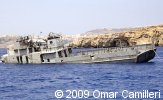 There is a new dive waiting off the coast of Comino: former Armed Forces of Malta (AFM) Patrol Boat P31. The wreck is 52 m long and lies at 18 m.
The Malta Tourism Authority co-ordinated the scuttling of the former Patrol Boat to add to the number of underwater attractions for scuba divers visiting Ċirkewwa and Comino.
The Parliamentary Secretary for Tourism, the Hon. Dr Mario de Marco said that Malta has nine wrecks being purposely scuttled vessels for diving; and that the P31's scuttling is part of a two-phase project to scuttle two patrol boats. The first was the P29 which was scuttled in Ċirkewwa in August 2007.
He also referred to the process of the scuttling which included an Environmental Impact Assessment carried out to assess the environmental impact of this project. As a result of the studies, the scuttling location was shifted by approximately 30 metres to avoid important sea grass beds.
He added that the Maltese Islands last year attracted almost 55,000 divers with the majority hailing from the UK, Germany and Italy.
Malta is renowned as a diving destination, with two of its dive sites making it into the list of the top ten European dive sites, as voted for by SCUBA Travel readers.
Further Information:
Malta Tourism Authority
AFM Video of the Scuttling
What do you think of this news item? Join a discussion.
Labels: Europe, Malta and Gozo, Mediterranean, wrecks

Friday, April 11, 2008
Better Mooring for the SS Thistlegorm dive boats
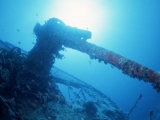 Voted one of the best dives in the world, the SS Thistlegorm was deteriorating because of the numbers of divers visiting it.
In December 2007, the Hurghada Environmental Protection and Conservation Association (HEPCA) installed installed 32 mooring lines at the site of the wreck to help protect it. However, in the three months since the conservation work, at least half of the lines have been damaged
Divers from the HEPCA mooring team have spent the last few days working on the mooring system and have lengthened the lines to minimum 18m depth. All the lines are now fitted with steel eyelets to make tying on easier, and each line has a buoy to aid easier identification. In addition, boats are no longer permitted to use the mooring system unless they throw an anchor from the stern. This extra stability should help to ensure that the lines do not become shredded by rubbing against the structure of the wreck in wind and strong currents.
It is hoped that these new enhancements to the system will eliminate any issues with diving operators using the mooring system and will ensure that all who visit the SS Thistlegorm comply with its use. This additional work was undertaken with minimum disruption and without the need for closure of the wreck.
The conservation work on the SS Thistlegorm is part of HEPCA'S Saving the Red Sea Wrecks Campaign.
What do you think of this news item? Start a discussion.
Bookmark with: del.icio.us | Digg | Newsvine | NowPublic | Reddit
|
 Slashdot It! | Facebook | StumbleUpon
 --
Subscribe to SCUBA News (ISSN 1476-8011) for more free news, articles, diving reports and marine life descriptions - http://www.scubatravel.co.uk/news.html

Monday, December 17, 2007
Thistlegorm open to Divers
 Following an intense operation, conservation work to preserve the wreck of the Thistlegorm has been successful and finished on schedule.
Diving boats and operators can now make use of the new mooring system.
More details of the newly installed moorings can be found on the HEPCA website.
In addition to the moorings, a quantity of holes have been drilled in the wreck as air-escape outlets. Further holes will be drilled at a later date but will not require further closure of the site.
The conservation work on the SS Thistlegorm will now be followed by a similar project on the Rosalie Moller and other wrecks under threat as part of the HEPCA ‘Saving the Red Sea Wrecks’ Campaign.
-
What do you think of this news item? Start a discussion.
Bookmark with: del.icio.us | Digg | Newsvine | NowPublic | Reddit
|
Slashdot It! | Facebook | StumbleUpon --
Subscribe to SCUBA News (ISSN 1476-8011) for more free news, articles, diving reports and marine life descriptions - http://www.scubatravel.co.uk/news.html
Labels: dive destination, Red Sea, wrecks
Thursday, December 06, 2007
Conservation work starts on the Thistlegorm
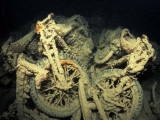 Conservation work has now started on the SS Thistlegorm off the Red Sea coast of Egypt. The intense operation to install moorings and air-escape outlets on this legendary wreck is being undertaken by Red Sea NGO Hurghada Environmental Protection and Conservation Association (HEPCA). Members of the HEPCA diving and mooring team are currently working alongside volunteer divers from the Red Sea community to preserve the SS Thistlegorm for the future.
 The conservation operation on the SS Thistlegorm is expected to last 10-15 days. HEPCA is ensuring that the work causes minimal inconvenience and will be completed as timely as possible subject to the prevailing weather conditions. During this time no diving activity is permissible on the wreck for safety reasons.
The temporary closure of the SS Thistlegorm is part of the ‘Saving the Red Sea Wrecks’ Campaign, which was launched by HEPCA at the UK Dive Show in October. The Campaign will later target the Rosalie Moller and other Red Sea wrecks under threat. The aim is to stop further damage to our wrecks and also encourage all Red Sea diving operators and divers to adopt a more environmentally aware operational and diving code.
The SS Thistlegorm has been voted one of the Top Ten Dives in the World.
What do you think of this news item? Start a discussion.
Bookmark with: del.icio.us | Digg | Newsvine | NowPublic | Reddit
|
Slashdot It! | Facebook | StumbleUpon --
Subscribe to SCUBA News (ISSN 1476-8011) for more free news, articles, diving reports and marine life descriptions - http://www.scubatravel.co.uk/news.html
Labels: dive destination, Red Sea, wrecks
Thursday, November 01, 2007
Thistlegorm off limits to divers for a month
 The wreck of the Thistlegorm will be closed to divers from 15th November till 15th December 2007. This is to allow for conservation measures that will help to preserve this historical and legendary wreck for the future. The closure is part of the new Saving The Red Sea Wrecks Campaign, launched by HEPCA (Hurghada Environment Protection and Conservation Association).
 The campaign proposes a detailed plan to change in common vessel operational procedures that contribute to the degradation of the wreck. A complete educational and awareness program will also be rolled out to encourage more environmentally friendly briefings and best practice. The campaign will later target the Rosalie Moller and other Red Sea wrecks under threat.
During the intense conservation operation, the wreck of the Thistlegorm will acquire a complete buoy mooring system; separate descent and ascent lines; and air-escape outlets to allow for pockets of disposed air from scuba tanks to escape.
Hepca says "We have witnessed for too long the long-term effects of an unprecedented level of use on the SS Thistlegorm and many other wrecks in the Red Sea. Without the intervention of proper preservation management we will lose these valuable wrecks forever.
We hope that all diving operators and organisations will stand together to assist in the realisation of this unique operation and the Saving The Red Sea Wrecks Campaign."
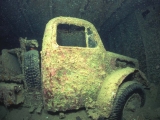 The Thistlegorm has been voted one of the Top Ten Dives in the World. A British vessel, it was attacked from the air and sunk in 1941 whilst carrying a cargo of war supplies: rifles, motor bikes, train carriages, trucks. These are still inside the wreck.
What do you think of this news item? Start a discussion.
Bookmark with: del.icio.us | Digg | Newsvine | NowPublic | Reddit
|
Slashdot It! | Facebook | StumbleUpon --
Subscribe to SCUBA News (ISSN 1476-8011) for more free news, articles, diving reports and marine life descriptions - http://www.scubatravel.co.uk/news.html
Tuesday, October 09, 2007
Meet the Author: Todd Stevens
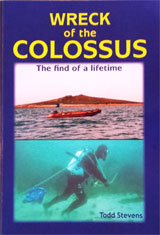 Todd Stevens is the author of Wreck of the Colossus, The find of a lifetime. The story of the discovery of a 200 year old historic shipwreck and its aftermath.
- What prompted you to write the book?
- I was living my dream and wanted to write about my experiences. Incorrect reporting within the media regarding the discovery of the wreck and its carving were also factors. There also seemed to be many misconceptions written about the Colossus and its history.
- How long did it take you to write?
- In total-6 years!! I first had to learn to write and then to use a computer. My first two years of one finger typing (about 100 pages) were lost when the computer crashed and the file was irretrievable. After starting again it took 4 years to complete.
- What were the main lessons you learned from your experience with the Colossus?
- Not to trust those in authority, archaeologists, the media, or anyone wanting to make a buck from diving and salvage.
- Do you still get the same satisfaction from searching for wrecks?
- Yes, since the Colossus I have discovered five new wrecks in my local area, one of which was protected by the government in 2005. Another I am working on at present has, due to the fantastic history behind it, prompted me to write a second book. (It will be out next spring hopefully)
- What do you do when you are not working or diving?
- Hunting for shipwrecks; writing; researching; I like walking and am also a keen snorkeler. I am also a trustee of my local museum and currently have a weekly show on local radio .
- What would you say is the biggest change in diving since you started?
- I suppose it would be the types of people the sport now attracts, there are no longer the swash buckling types around that there once were.
- About the author
- East London drop out heading nowhere; my brothers and I took up diving with the BSAC in Northampton in 1979 and the sport has kept me on the straight and narrow ever since. Carpenter by trade I was extremely active in the sport all around the British coast. I moved to the isles of Scilly in 1999 to hunt out undiscovered shipwrecks found the stern of Colossus in May of that same year. I lost the wreck to anyone who thought they had a vested interest in it, then wrote the book. Along with my wife Carmen (who is also a keen diver) I am now head of a small team that actively hunts for undiscovered historic wreck sites - there's usually treasure involved.
You can purchase Wreck of the Colossus by sending a cheque for £17 (including p&p) made out to Colossus Publications to Colossus, Pilot's Retreat, St Mary's, Isles of Scilly, TR21 0NA. Alternatively visit the web site at http://www.hmscolossus.co.uk/.
What do you think of this news item? Start a discussion.
Bookmark with: del.icio.us | Digg | Newsvine | NowPublic | Reddit
|
Slashdot It! | Facebook | StumbleUpon --
Subscribe to SCUBA News (ISSN 1476-8011) for more free news, articles, diving reports and marine life descriptions - http://www.scubatravel.co.uk/news.html
Friday, September 14, 2007
Wanted: Mary Rose Divers
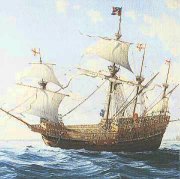 The Mary Rose trust is organising a 25th anniversary reunion for divers who took part in raising the historic warship.
The Mary Rose is the only 16th century warship on display anywhere in the world. Built between 1509 and 1511, she was one of the first ships able to fire a broadside, and was a firm favourite of King Henry VIII.
After a long and successful career, she sank accidentally during an engagement with the French fleet in 1545. Her rediscovery and raising were seminal events in the history of nautical archaeology.
The reunion is to be held on 10th, 11th and 12th October in Portsmouth.
If you dived on the Mary Rose or know anyone who did dive on the Mary Rose then contact
Divers' Reunion
c/o The Mary Rose Trust
1/10 College road
HM Naval Base
Portsmouth
PO1 3LX
mail@maryrose.org
www.maryrose.org
What do you think of this news item? Start a discussion.
Bookmark with: del.icio.us | Digg | Newsvine | NowPublic | Reddit
|
Slashdot It! | Facebook | StumbleUpon --
Subscribe to SCUBA News (ISSN 1476-8011) for more free news, articles, diving reports and marine life descriptions - http://www.scubatravel.co.uk/news.html
Friday, September 07, 2007
Divers Discover New Wreck in Red Sea
Following several months of research, Paul Vinten and Aaron Bruce from Hurghada Emperor Tekstreme have found the wreck of a ferry lying at a depth of between 64 and 83m. The Al-Qamar Al-Saudi Al-Misri sank north of the main port of Hurghada. It is intact and lying on its starboard side
Says Paul, "When the image of the wreck came on the echo sounder, smiles appeared on the faces of me, Aaron and the captain & crew. To find a wreck like this, and then to dive it, gave us all a great sense of achievement and whilst swimming round the wreck I couldn't stop thinking that I may be the first diver to see this. An amazing feeling!"
The 125m-long ferry sank in a fire caused by an explosion in its engine room in 1994.
The boat's 505 passengers and 63 crew were forced to abandon ship. Several vessels came to the aid of the stricken vessel, including the USS Briscoe, however the ship capsized and 21 people lost their lives.
Source: Emperor Divers
What do you think of this news item? Start a discussion.
Bookmark with: del.icio.us | Digg | Newsvine | NowPublic | Reddit
| Slashdot It! | Facebook | StumbleUpon
--
Subscribe to SCUBA News (ISSN 1476-8011) for more free news, articles, diving reports and marine life descriptions - http://www.scubatravel.co.uk/news.html
Says Paul, "When the image of the wreck came on the echo sounder, smiles appeared on the faces of me, Aaron and the captain & crew. To find a wreck like this, and then to dive it, gave us all a great sense of achievement and whilst swimming round the wreck I couldn't stop thinking that I may be the first diver to see this. An amazing feeling!"
The 125m-long ferry sank in a fire caused by an explosion in its engine room in 1994.
The boat's 505 passengers and 63 crew were forced to abandon ship. Several vessels came to the aid of the stricken vessel, including the USS Briscoe, however the ship capsized and 21 people lost their lives.
Source: Emperor Divers
What do you think of this news item? Start a discussion.
Bookmark with: del.icio.us | Digg | Newsvine | NowPublic | Reddit
|
Slashdot It! | Facebook | StumbleUpon --
Subscribe to SCUBA News (ISSN 1476-8011) for more free news, articles, diving reports and marine life descriptions - http://www.scubatravel.co.uk/news.html
Thursday, July 05, 2007
Scapa Flow Dive Guide

On Midsummers Day in 1919, a German Admiral ordered the German High Seas Fleet to be scuttled. Seventy-four German ships had been anchored at the Orkney Islands of Scotland. They were sunk to prevent them being divided up amongst the allies. Many of the ships were recovered for salvage; but those remaining submerged have helped make Scapa Flow into one of the most popular dive sites in Europe.
Lawson Wood's latest book is a comprehensive guide to diving Scapa Flow. The book begins with an introduction to the Orkneys and a history of the German High Seas Fleet. It goes on to cover travelling to, and staying in, Scapa. The rest of the book is a guide to the diving
It is a very extensive guide covering 75 wrecks and 9 reefs. Wood gives the history of each wreck and has plenty of photographs of the dives and the ships. He also provides sea-bed scans of the wrecks and detailed descriptions of each dive site. For each site there is a key points box with a summary of vital information such as location, depth, access and diving experience required.
Many divers assume that you must be extremely experienced to dive Scapa Flow, but the book makes plain that even novice divers can enjoy a good diving holiday there. All of the Motor Torpedo Boats and Blockships are in less than 18 m (60 ft) with many in less than 9 m (30 ft). Lawson Wood rates these as "quite possibly some of the best shallow shipwrecks in the world".
If you are considering going to Scapa Flow then this book is a must. I would buy it well in advance to help you prepare for the trip, deciding where to dive and what equipment to take. It is a great diving guide which is a blend of detailed diving information, wreck history and local information.
About the Author
Lawson Wood has written more than 40 historical and diving guides, including the successful Shipwrecks of the Cayman Islands. He is a founding member of the Marine Conservation Society and founder of the St.Abbs and Eyemouth Voluntary Marine Nature Reserve in Scotland. He made photographic history by becoming a Fellow of the Royal Photographic Society and Fellow of the British Institute of Professional Photographers solely for underwater photography. He is also a Fellow of the Royal Geographical Society.
Review by Andrew Reay-Robinson
The Scapa Flow Dive Guide is available from Aquapress, Amazon and all good bookshops.
What do you think of this news item? Start a discussion.
Bookmark with: del.icio.us | Digg | Newsvine | NowPublic | Reddit
--
Subscribe to SCUBA News (ISSN 1476-8011) for more free news, articles, diving reports and marine life descriptions - http://www.scubatravel.co.uk/news.html
Labels: books, dive destination, UK, wrecks
Tuesday, May 15, 2007
Divers to attempt to visit un-dived wreck Stella Polaris
On the 2nd September 2006 the famous first class luxury liner Stella Polaris sank off the coast of Kushimoto, Japan.
The ship sank to a depth of 72 m, and has never been dived by commercial or scuba divers. She lays upright on a sandy, gently sloping bottom. Her two masts reach a depth of 40 m.
An international technical dive team from Austria, Sweden, UK and Japan, will attempt visit the wreck between the 22 and 30 May to photograph and film the her.
The wreck is in a water depth beyond recreational diving and the dive equipment will be rebreathers on mixed gas.
Local mariners in Japan consider the dive site to be demanding and dangerous.
The Stella Polaris wreck is situated in the Kuroshio current which is the second strongest tidal current in the world with speeds up to 4 knots. Additional shark encounters are anticipated.
Further Reading:
http://www.aquatec-innerspace.com/
What do you think of this news item? Start a discussion.
--
Subscribe to SCUBA News (ISSN 1476-8011) for more free news, articles, diving reports and marine life descriptions - http://www.scubatravel.co.uk/news.html
The ship sank to a depth of 72 m, and has never been dived by commercial or scuba divers. She lays upright on a sandy, gently sloping bottom. Her two masts reach a depth of 40 m.
An international technical dive team from Austria, Sweden, UK and Japan, will attempt visit the wreck between the 22 and 30 May to photograph and film the her.
The wreck is in a water depth beyond recreational diving and the dive equipment will be rebreathers on mixed gas.
Local mariners in Japan consider the dive site to be demanding and dangerous.
The Stella Polaris wreck is situated in the Kuroshio current which is the second strongest tidal current in the world with speeds up to 4 knots. Additional shark encounters are anticipated.
Further Reading:
http://www.aquatec-innerspace.com/
What do you think of this news item? Start a discussion.
--
Subscribe to SCUBA News (ISSN 1476-8011) for more free news, articles, diving reports and marine life descriptions - http://www.scubatravel.co.uk/news.html
Wednesday, March 28, 2007
Europe's largest wreck is now open for divers

Up until recently diving on the Fu Shan Hai, Europe's largest wreck, was prohibited. Now though, after a project by Danish Technical Divers, the Danish Authorities have removed the ban.
The Chinese Bulk Carrier the Fu Shan Hai, and the Gdynia, collided on 31 May 2003 3 miles from Bornholm, Denmark.
After the collision, the Fu Shan Hai stayed afloat but the bow kept sinking as the hours went by. After the collision the master realised that the ship was in danger of sinking and he transmitted a MAYDAY distress signal. At around 1330 hours, the crew had abandoned the ship in two life boats.
At 2049 hours the same evening the Fu Shan Hai sank with a harmless cargo of fertiliser. She now rests at 68 meters. However the ship's heavy fuel oil created a hazard for the environment. In the months following the sinking, around 1460 tons of oil were removed.
After the clean up operation was completed the Danish Maritime Authority banned diving on the wreck. However, from 29 July to 5 August 2006 a group of Technical Divers were given permission to dive the wreck and document the condition. As a result of this the Danish Maritime Authority has lifted the ban.
For more information see the Fu Shan Hai Project
What do you think of this news item? Start a discussion.
--
Subscribe to SCUBA News (ISSN 1476-8011) for more free news, articles, diving reports and marine life descriptions - http://www.scubatravel.co.uk/news.html
Labels: dive destination, wrecks
Tuesday, March 20, 2007
New book sheds light on more than 300 undiscovered wrecks
Nigel Pickford, bestselling author of Atlas of Shipwreck and Treasure, has just had his new book published by Chatham Publishing.
 Lost Treasure Ships of the Northern Seas takes a closer look at some of the thousands of wrecks that still lie undiscovered in the relatively shallow waters of the North Sea and the Baltic, and identifies more than 300 such sites, giving concise details of ship, voyage, cargo and current state of knowledge. This represents a large proportion of the most valuable wrecks in the designated area. A significant proportion may be regarded as high-value - either in financial terms or because of their potential contribution to historical knowledge - but few have been precisely located.
The book contains a fascinating gazetteer of all these sites and offers a treasure-trove of information for divers and armchair adventurers.
In addition, there are fifteen chapters, each a case-study of a different wreck, chosen to illustrate the range of problems – and rewards – likely to be encountered when treasure hunting, and these offer invaluable lessons to divers. They include a wide variety of ship types, from a Roman trading vessel to a German liner sunk in the Baltic by the Russians in 1945.
Illustrated throughout in colour and black and white, this new book is a practical guide for divers, and offers a fascinating glimpse into the maritime history of a region where ships have fought and traded for thousands of years.
NIGEL PICKFORD is the author of four previous books, including the bestselling Atlas of Shipwreck and Treasure.
LOST TREASURE SHIPS OF THE NORTHERN SEAS: A Guide and Gazetteer to 2000 Years of Shipwreck is now available in bookshops, through the Chatham Publishing web site, from Amazon, or can be ordered by ‘phone on 020 8458 6314.
ISBN 978-1-86176-250-4, RRP £19.99.
What do you think of this news item? Start a discussion.
--
Subscribe to SCUBA News (ISSN 1476-8011) for more free news, articles, diving reports and marine life descriptions - http://www.scubatravel.co.uk/news.html
Lost Treasure Ships of the Northern Seas takes a closer look at some of the thousands of wrecks that still lie undiscovered in the relatively shallow waters of the North Sea and the Baltic, and identifies more than 300 such sites, giving concise details of ship, voyage, cargo and current state of knowledge. This represents a large proportion of the most valuable wrecks in the designated area. A significant proportion may be regarded as high-value - either in financial terms or because of their potential contribution to historical knowledge - but few have been precisely located.The book contains a fascinating gazetteer of all these sites and offers a treasure-trove of information for divers and armchair adventurers.
In addition, there are fifteen chapters, each a case-study of a different wreck, chosen to illustrate the range of problems – and rewards – likely to be encountered when treasure hunting, and these offer invaluable lessons to divers. They include a wide variety of ship types, from a Roman trading vessel to a German liner sunk in the Baltic by the Russians in 1945.
Illustrated throughout in colour and black and white, this new book is a practical guide for divers, and offers a fascinating glimpse into the maritime history of a region where ships have fought and traded for thousands of years.
NIGEL PICKFORD is the author of four previous books, including the bestselling Atlas of Shipwreck and Treasure.
LOST TREASURE SHIPS OF THE NORTHERN SEAS: A Guide and Gazetteer to 2000 Years of Shipwreck is now available in bookshops, through the Chatham Publishing web site, from Amazon, or can be ordered by ‘phone on 020 8458 6314.
ISBN 978-1-86176-250-4, RRP £19.99.
What do you think of this news item? Start a discussion.
--
Subscribe to SCUBA News (ISSN 1476-8011) for more free news, articles, diving reports and marine life descriptions - http://www.scubatravel.co.uk/news.html
Friday, November 10, 2006
New Act Protects More Wrecks
From November 1st a new act protects designated wrecks and sites from divers in United Kingdom waters and, in some cases, from UK divers in foreign waters.
There are two levels of protection offered by this Act: Protected Places (wrecked vessels or aircraft) and Controlled Sites.
Protected Places include the remains of any aircraft which crashed while in military service or any vessel designated (by name) which sank in military service after 4th August 1914. Diving is allowed at "Protected Places" but it is an offence to tamper with, damage, remove or unearth any remains or enter any hatch or other opening. This means that you can look but not touch. There are currently 36 designated vessels, sunk between 1916 and 1982. For the full list see http://www.opsi.gov.uk/si/si2006/20062616.htm.
Controlled Sites are specifically designated areas which encompass the remains of aircrafts or ships sunk or stranded in military service within the last two hundred years. Diving is prohibited these sites without a specific licence. For the list of controlled sites see http://www.opsi.gov.uk/si/si2006/20062616.htm.
Further Reading:
The Protection of Military Remains Act 1986 (Designation of Vessels and Controlled Sites) Order 2006
PROTECTED WRECKS IN THE UK
--
Subscribe to SCUBA News (ISSN 1476-8011) for more free news, articles, diving reports and marine life descriptions - http://www.scubatravel.co.uk/news.html
There are two levels of protection offered by this Act: Protected Places (wrecked vessels or aircraft) and Controlled Sites.
Protected Places include the remains of any aircraft which crashed while in military service or any vessel designated (by name) which sank in military service after 4th August 1914. Diving is allowed at "Protected Places" but it is an offence to tamper with, damage, remove or unearth any remains or enter any hatch or other opening. This means that you can look but not touch. There are currently 36 designated vessels, sunk between 1916 and 1982. For the full list see http://www.opsi.gov.uk/si/si2006/20062616.htm.
Controlled Sites are specifically designated areas which encompass the remains of aircrafts or ships sunk or stranded in military service within the last two hundred years. Diving is prohibited these sites without a specific licence. For the list of controlled sites see http://www.opsi.gov.uk/si/si2006/20062616.htm.
Further Reading:
The Protection of Military Remains Act 1986 (Designation of Vessels and Controlled Sites) Order 2006
PROTECTED WRECKS IN THE UK
--
Subscribe to SCUBA News (ISSN 1476-8011) for more free news, articles, diving reports and marine life descriptions - http://www.scubatravel.co.uk/news.html
Labels: wrecks
