Tuesday, January 19, 2010
Minke Whales Should Not be Culled
Antarctic minke whales are among the few species of baleen whales not decimated by commercial whaling during the 20th century, and some scientists have hypothesised that their large numbers are hampering the recovery of deleted species, such as blue, fin and humpback, which may compete for krill.
This “Krill Surplus Hypothesis” postulates that the killing of some two million whales in the Southern Ocean during the early- and mid-20th century resulted in an enormous surplus of krill, benefiting the remaining predators, including Antarctic minke whales.
But the new analysis, published this week in the journal Molecular Ecology, estimates that contemporary populations of minke whales are not “unusually abundant” in comparison with their historic numbers.
The Southern Ocean is one of the world’s largest and most productive ecosystems and in the 20th century went through what Scott Baker, a whale geneticist at Oregon State University, called “one of the most dramatic ‘experiments’ in ecosystem modification ever conducted.” The elimination of nearly all of the largest whales – such as the blue, fin and humpback – removed a huge portion of the biomass of predators in the ecosystem and changed the dynamics of predator-prey relationships.
Blue whales were reduced to about 1-2 percent of their previous numbers; fin whales to about 2-3 percent; and humpbacks to less than 5 percent. “The overall loss of large whales was staggering,” Baker said.
“It is possible that the removal of the larger whales would have meant more food for minkes,” Baker said, “but we don’t know much about the historic abundance of krill and whether the different whale species competed for it in the same places, or at the same time. It is possible that there might have been enough krill for all species prior to whaling.”
The scientists also say that current minke whale populations may be limited by other factors, including changes in sea ice cover.
“The bottom line is that the Krill Surplus Hypothesis does not appear to be valid in relation to minke whales and increasing hunting based solely on the assumption that minke whales are out-competing other large whale species would be a dubious strategy,” Baker said.
Further Reading: Oregon State University
What do you think of this news item? Join a discussion.
Labels: marine biology, research, SCUBA News, whale and dolphins

Monday, January 04, 2010
Acoustic Tools Help Whales
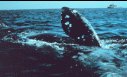 New acoustic sensors are being used in research and conservation projects around the world, with some very important practical results. Among them is improved monitoring of endangered North Atlantic right whales in an effort to reduce ship strikes, a leading cause of their deaths.
Sofie Van Parijs is one of many researcher whose work is decribed this month in the journal Marine Ecology Progress Series. Her paper is one of about a dozen in a special theme issue focused on acoustics in marine ecology. Van Parijs, who currently heads the NEFSC's Protected Species Branch, is also a co-author of a related paper on acoustic interference or masking, in which marine animals alter their use of sound as a result of changing background noise.
Van Parijs and her colleagues focus on two types of acoustic sensors, real-time and archival. Real-time sensors are mounted on surface buoys, usually anchored or cabled to the ocean bottom, or deployed as arrays towed from a surface vessel. Archival sensors are affixed on bottom-moored buoys equipped with hydrophones to continuously record ocean sounds for long periods of time, often up to three months, before the sensors are temporarily recovered and their batteries refreshed. Some archiving sensors can be mounted of individual animals.
“Marine animals live their lives and communicate acoustically across different time and space scales and use sound for different reasons,” said Van Parijs. “We need to use the right tool in the right place for the right need. There is no ‘one size fits all’ when it comes to using technology in the ocean.”
Large whales move and communicate over great distances, while smaller whales and dolphins tend to communicate over smaller areas. Pinnipeds, the group of marine mammals that includes seals, walrus and sea lions, can breed on land, on ice or in the water, and move and communicate from small to medium distances. Human-produced sounds complicate the sensing problem by adding sounds to what can be a very noisy environment.
The use of passive acoustic monitoring is increasing as improved reliability and lower hardware and software costs provide researchers with a set of tools that can answer a broad range of scientific questions. This information can, in turn, be used in conservation management and mitigation efforts. While most of the new technologies have been applied in studies of whales and dolphins, the researchers say the sensors can also be used in studying pinnipeds, sirenians (manatees and dugongs) and fish.
Further Reading: Northeast Fisheries Science Center
What do you think of this news item? Join a discussion.
Labels: environment, technology, whale and dolphins
Monday, October 12, 2009
Western Australia to Protect Whales with Marine Park
 The state government of Western Australia is creating a marine park to protect and manage a key nursery of the world's largest humpback whale population.
 The marine park is to be at Camden Sound, about 400km north of Broome, protecting its pristine marine environment for generations to come.
Allowing for consultation, including a public comment period of three months, a marine park could be established by mid-2010.
Environment Minister Donna Faragher said Camden Sound was the biggest calving area for humpback whales in the southern hemisphere.
"More than 1,000 humpback whales can be found in the Camden Sound ‘maternity ward' during the calving season," she said.
Mrs Faragher added "They are part of the biggest population of humpback whales in the world - numbering about 22,000 - that migrate from Antarctica every year to give birth in the waters off the north of our State.
"Camden Sound is also rich in other marine life, from coral reefs and mangrove forests to turtles and dugongs.
Humpbacks have been protected from whaling in the southern hemisphere since 1963, when numbers in Western Australia fell to fewer than a thousand. Their numbers are recovering at a remarkable 10 per cent each year.
Found in oceans around the world, humpback whales typically migrate up to 25,000 kilometres each year. They feed only in summer, in polar waters, and migrate to warmer waters to breed and give birth in the winter. During the winter, humpbacks fast and live off their fat reserves.
Further Reading:
Scientists discover massive humpback whale nursery off WA coast
What do you think of this news item? Join a discussion.
Labels: Australia, SCUBA News, whale and dolphins
Friday, October 09, 2009
Albatrosses feed with Killer Whales
A miniature digital camera was attached to the backs of four black-browed albatrosses (Thalassarche melanophrys). Results are published online this week in the open-access journal PLoS ONE.
Albatrosses fly many hundreds of kilometers across the open ocean to find and feed upon their prey. Despite the growing number of studies concerning their foraging behaviour, relatively little is known about how albatrosses actually locate their prey. The still images recorded from the cameras showed that some albatrosses actively followed a killer whale (Orcinus orca), possibly to feed on food scraps left by this diving predator. The camera images together with the depth profiles showed that the birds dived only occasionally, but that they actively dived when other birds or the killer whale were present. This association with diving predators or other birds may partially explain how albatrosses find their prey more efficiently in the apparently ‘featureless’ ocean, with a minimal requirement for energetically costly diving or landing activities.
The camera, developed by the National Institute for Polar Research in Tokyo, is removed when the albatross returns to its breeding ground after foraging trips. It is small and weighs 82g. Although the camera slightly changes the aerodynamic shape of the albatross, it didn’t affect the breeding success of the study birds.
Dr Richard Phillips from British Antarctic Survey (BAS) says, “These images are really interesting. They show us that albatrosses associate with marine mammals in the same way as tropical seabirds often do with tuna. In both cases the prey (usually fish) are directed to the surface and then it’s easy hunting for the birds."
The study took place at the breeding colony of black-browed albatrosses at Bird Island, South Georgia in January 2009, as part of a UK-Japan International Polar Year 2007-9 project.
What do you think of this news item? Join a discussion.
Labels: research, SCUBA News, whale and dolphins
Wednesday, September 23, 2009
Killer Whales Die without Chinook Salmon
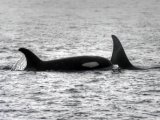 When you mention killer whales, the image of one ambushing a terrified seal often springs to mind. But there are populations of killer whales who live exclusively on fish. And not on just any fish: they are very specialised in which fish they will eat.
 According to research published in Biology Letters, two populations studied in the northeastern Pacific Ocean prefer to eat Chinook salmon (Oncorhynchus tshawytscha). So much so that if the numbers of Chinook salmon drop this directly affects the numbers of killer whales. The whales seem unable to adopt a new food, become weak and have a higher mortality.
The authors conclude that other killer whale populations may be similarly constrained to one or two prey species, because the young whales will have learnt their fishing strategies from the rest of the group. They too will be limited in their ability to switch to new food if necessary.
Journal Reference:
John K. B. Ford, Graeme M. Ellis, Peter F. Olesiuk, and Kenneth C. Balcomb
Linking killer whale survival and prey abundance: food limitation in the oceans' apex predator?
Biol Lett 2009 : rsbl.2009.0468v1-rsbl20090468.
What do you think of this news item? Join a discussion.
Labels: fish, marine biology, SCUBA News, whale and dolphins
Thursday, May 21, 2009
Endangered right whales found where they were thought extinct
 Using a system of underwater hydrophones that can record sounds from hundreds of miles away, a team of scientists has documented the presence of endangered North Atlantic right whales in an area they were thought to be extinct.
The discovery is particularly important, researchers say, because it is in an area that may be opened to shipping if the melting of polar ice continues, as expected.
Results of the study were presented this week at a meeting of the Acoustical Society of America.
The scientists from Oregon State University and the National Oceanic and Atmospheric Administration are unsure of exactly how many whales were in the region, which is off the southern tip of Greenland and site of an important 19th-century whaling area called Cape Farewell Ground. But they recorded more than 2000 right whale vocalizations in the region from July to December of 2007.
“The technology has enabled us to identify an important unstudied habitat for endangered right whales and raises the possibility that – contrary to general belief – a remnant of a central or eastern Atlantic stock of right whales still exists and might be viable,” said David Mellinger, chief scientist of the project.
“We don’t know how many right whales there were in the area,” Mellinger added. “They aren’t individually distinctive in their vocalizations. But we did hear right whales at three widely space sites on the same day, so the absolute minimum is three. Even that number is significant because the entire population is estimated to be only 300 to 400 whales.”
Only two right whales have been sighted in the last 50 years at Cape Farewell Ground, where they had been hunted to near extinction prior to the adoption of protective measures.
The pattern of recorded calls suggests that the whales moved from the southwest portion of the region in a northeasterly direction in late July, and then returned in September – putting them directly where proposed future shipping lanes would be likely.
Right whales are the most endangered large whale and vulnerable to collisions with ships as they ignore general ship sounds. Alarm sirens intended to scare them away from ships may actually be more likely to cause a collision, as the whales have been shown to rush to the surface when they hear the alarm.
Related News:
Lawsuit Filed to Protect World's Most Endangered Whale
What do you think of this news item? Join a discussion.
Labels: research, SCUBA News, whale and dolphins
Tuesday, August 19, 2008
Humpback whale on road to recovery

Some large whale species, including the humpback, are now less threatened with extinction, according to the cetacean update of the 2008 IUCN Red List. Most small coastal and freshwater cetaceans, however, are moving closer to extinction.
The humpback whale (Megaptera novaeangliae) has moved from Vulnerable to Least Concern, meaning it is at low risk of extinction, although two subpopulations are Endangered. The southern right whale (Eubalaena australis) has also moved to Least Concern.
“Humpbacks and southern right whales are making a comeback in much of their range mainly because they have been protected from commercial hunting,” says Randall Reeves, Chair of the Cetacean Specialist Group of the IUCN Species Survival Commission, who led the IUCN Red List assessment. “This is a great conservation success and clearly shows what needs to be done to ensure these ocean giants survive.”
Despite the improvement in status of these two species, the assessment revealed deterioration in the status of others. Overall, nearly a quarter of cetacean species are considered threatened, and of those, more than 10% (nine species) are listed as Endangered or Critically Endangered, the highest categories of threat. In addition, two subspecies and 12 subpopulations are listed as Critically Endangered.
Whales are under threat in many areas from ship strikes, entanglement in fishing gear, habitat deterioration, declining prey and noise disturbance.
Military sonar is another threat that particularly affects deep-diving beaked whales and other cetaceans like the melon-headed whale. Mass strandings of these species have occurred more often in the last 30 years.
“Large parts of the oceans are now filled with human-generated noise, not only from military sonar but also from seismic surveys and shipping. This noise undoubtedly affects many cetaceans, in some cases leading to their death,” says Jan Schipper, Conservation International and IUCN Global Mammal Assessment Director. “It may not always kill whales and dolphins, but it affects their ability to communicate and it can drive them away, at least temporarily, from their feeding grounds.”
Climate change is also starting to affect whales. The distribution of many species is changing, with the potential for a cascade of effects such as exposure to new diseases, inter-species competition and changes in prey populations. The Antarctic great whales, for example, depend on krill for food. As water temperatures rise, krill populations may decline, leaving such whales short of food.
“To save whales for future generations, we need to work closely with the fishing industry, the military and offshore enterprises including shippers and oil developers – and we need to fight climate change,” says Julia Marton-Lefèvre, IUCN Director General.
What do you think of this news item? Join a discussion.
Labels: environment, SCUBA News, whale and dolphins
Thursday, December 20, 2007
New IMAX Film: DOLPHINS AND WHALES
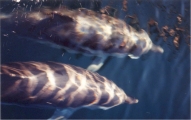 Filmmakers and environmentalists Francois and Jean-Jacques Mantello and ocean explorer Jean-Michel Cousteau are pleased to announce they have joined forces on the new 3D documentary film DOLPHINS AND WHALES 3D: Tribes of the Ocean, which will be released at IMAX (R) Theatres beginning on February 15th, 2008. This latest installment in 3D Entertainment’s unique ocean themed film series will deliver a strong and compelling conservation message while bringing audiences on a close encounter, for the very first time in 3D, with small and giant cetaceans such as humpback and sperm whales, orcas and dolphins.
"I am delighted to be associated with this new, unforgettable underwater voyage where viewers will don their 3D glasses much in the same way we put on our diving masks and will be immersed in the rarely seen world of these fascinating but vulnerable creatures," says Jean-Michel Cousteau. "DOLPHINS AND WHALES 3D: Tribes of the Ocean is an ideal means of reaching a vast audience and helping individuals around the world to understand that we need to act responsibly in order to ensure the preservation of the world’s oceans and its inhabitants because, in the end, the most crucial partners whales and dolphins have are YOU and me."
"DOLPHINS AND WHALES 3D: Tribes of the Ocean will show a large variety of cetacean species, filmed exclusively in the wild, as they really are in their daily lives: interacting socially, playing, communicating through their highly complex system of sound, feeding, breeding, migrating and perpetually fighting for their survival," explains the film’s director, Jean-Jacques Mantello.
"Although each encounter with these wild creatures was truly magical and highly emotional, this marks one of the most challenging and epic productions I have ever taken on."
Principal photography began in June 2004 in Polynesia. An extensive three years were required to capture the footage during the course of 12 international expeditions and over 600 hours underwater at some of the remotest locations on Earth, including off the Pacific Ocean atolls of Moorea and Rurutu, Vava’u island of the Kingdom of Tonga, Pico Island in the Azores archipelago, the Valdez Peninsula in Argentina, Sapphire Coast of Australia, Bay of Islands in New Zealand and Canada's Hudson Bay. Unlike other IMAX-type documentaries, the film consists solely of underwater footage, with none of the usual “dive preparation” sequences.
The film trailer can been seen at http://www.DOLPHINSandWHALES3D.com
High-resolution photos from the film are available at http://www.3DEpublicity.com.
What do you think of this news item? Start a discussion.
Bookmark with: del.icio.us | Digg | Newsvine | NowPublic | Reddit
|
 Slashdot It! | Facebook | StumbleUpon
 --
Subscribe to SCUBA News (ISSN 1476-8011) for more free news, articles, diving reports and marine life descriptions - http://www.scubatravel.co.uk/news.html

Labels: sealife, whale and dolphins
Wednesday, May 02, 2007
Dominica - "the Nature Island" - Supports Whaling
Ironically, the Caribbean island markets itself as the "Nature Island", with whale watching being one of its attractions.
As a response to the financial input from Japan, a British peer, Lord Ashcroft, has commissioned an unprecedented television advertising campaign which he hopes will persuade the inhabitants of Dominica and five other West Indies nations not to support Japan's plan to overturn the ban on commercial whale hunting.
The campaign is being mounted in conjunction with the UK- and US-based Environmental Investigation Agency (EIA).
In recent years, the Japanese government, recognising the importance of national votes at the IWC, has been actively recruiting support from some of the world's smaller nations, trading financial assistance for pro-whaling votes at IWC meetings. The governments of six island nations in the eastern Caribbean, with a combined population of about half a million people, have succumbed to such overtures. Along with Dominica they are Antigua & Barbuda; Grenada; Saint Kitts and Nevis; Saint Lucia; Saint Vincent & the Grenadines. In every case, the Japanese have provided these nations with financial support in the form of fisheries aid.
Dominica joined the IWC in 1981 then left 1983 without voting on the ban on whaling in 1982. It rejoined the IWC in 1992, mostly taking a pro-whaling position, but often abstaining on key votes, including the vote to establish the Southern Ocean Sanctuary. However since 1997 Dominica has voted almost exactly in line with Japan, with 95 out of 98 votes cast mirroring Japan’s vote.
Lord Ashcroft, who has a home in Belize, said, "Amongst the sightings of which I have the most vivid and fond memories are of humpback whales in the Southern Ocean, close to Antarctica. To watch these huge and extraordinary creatures 'breach' - launching themselves head first right out of the water and then crashing back down - is in my view amongst the great wonders of the world. It is entirely beyond my comprehension that the Japanese now plan to harpoon fifty humpback whales next year in the Southern Ocean Whale Sanctuary itself. We must persuade our Caribbean friends to resist the Japanese bribery, and to vote in favour of the whales and a continuation of the ban."
The 59th annual meeting of the IWC takes place in Anchorage, Alaska, from 28th to 31st May 2007. In the run up to this meeting, the TV ad will be showing on prime time television in all six Caribbean countries that vote with Japan.
The Caribbean Whale Friends web site, funded by Lord Ashcroft, is asking people to e-mail the government departments of Dominica and the other nations, urging them to oppose commercial whaling. Contact details are at http://www.caribbeanwhalefriends.org/country_2.htm
The television commercial can be downloaded from the following link:
Username: ftp017 / password: whalepass
ftp://ftp.rushes.co.uk/
You can also view it at http://www.caribbeanwhalefriends.org/
More information:
Environmental Investigation Agency
Caribbean Whale Friends
SCUBA Diving in Dominica
What do you think of this news item? Start a discussion.
--
Subscribe to SCUBA News (ISSN 1476-8011) for more free news, articles, diving reports and marine life descriptions - http://www.scubatravel.co.uk/news.html
Labels: Caribbean, Dominica, environment, whale and dolphins
Tuesday, December 05, 2006
Save 945 whales - your ideas needed
The blue whales of the Antarctic are at less than 1 percent of their original abundance, despite 40 years of complete protection. Some populations of whales are recovering but some are not. Only one population, the East Pacific grey whale, is thought to have recovered to its original abundance, but the closely related West Pacific grey whale population is the most endangered in the world. It hovers on the edge of extinction with just over 100 remaining.
Source: Greenpeace
What do you think of this news item? Start a discussion.
--
Subscribe to SCUBA News (ISSN 1476-8011) for more free news, articles, diving reports and marine life descriptions - http://www.scubatravel.co.uk/news.html
Labels: sealife, whale and dolphins
Friday, September 15, 2006
Pacific nations to protect Whales
"There is a high level of support among Pacific people for conserving whales and dolphins. A growing number of Pacific nations are also declaring whale sanctuaries in their waters, most recently Vanuatu," New Zealand Conservation Minister Chris Carter said.
"Until now the primary international forum for discussing whale conservation has been the International Whaling Commission, which is widely regarded in the Pacific as outdated, deadlocked and expensive for poorer countries to join and attend."
The memorandum commits signatories to a whole range of initiatives to protect and preserve whales and dolphins, such as threat reduction measures and habitat protection. It comes into effect with four signatories, and up to 11 nations are expected to sign today.
Source: Press Release New Zealand Government
--
Subscribe to SCUBA News (ISSN 1476-8011) for more free news, articles, diving reports and marine life descriptions - http://www.scubatravel.co.uk/news.html
Labels: sealife, whale and dolphins
Thursday, September 29, 2005
Divers Risk Attack from Armed Dolphins
Dolphins have been trained in attack-and-kill missions since the Cold War. The US Atlantic bottlenose dolphins have apparently been taught to shoot terrorists attacking military vessels. Their coastal compound was breached during the storm, sweeping them out to sea. But those who have studied the controversial use of dolphins in the US defence programme claim it is vital they are caught quickly.
Leo Sheridan, 72, a respected accident investigator who has worked for government and industry, said he had received intelligence from sources close to the US government's marine fisheries service confirming dolphins had escaped.
'My concern is that they have learnt to shoot at divers in wetsuits who have simulated terrorists in exercises. If divers or windsurfers are mistaken for a spy or suicide bomber and if equipped with special harnesses carrying toxic darts, they could fire,' he said. 'The darts are designed to put the target to sleep so they can be interrogated later, but what happens if the victim is not found for hours?'
More info: http://observer.guardian.co.uk/international/story/0,6903,1577753,00.html
--
Subscribe to SCUBA News for more free news, articles, diving reports and marine life descriptions - http://www.scubatravel.co.uk/news.html
Labels: sealife, whale and dolphins
