Wednesday, January 20, 2010
Red Grouper create home for many animals
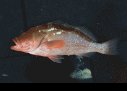 Researchers from Florida State University have found that Red Grouper (Epinephelus morio) dig out and maintain complex structures at the bottom of the sea. They remove sand, exposing hard rocks that are crucial to corals and sponges and the animals that rely on them. The work demonstrates that Red Groupers modify their environment, much as beavers do, creating habitat for many other animals including lobster and commercially important fish.
"Watching these fish dig holes was amazing enough,” says Felicia Coleman, lead researcher, “but then we realised that the sites served to attract mates, beneficial species such as cleaner shrimp that pick parasites and food scraps off the resident fish and a variety of prey species for the Red Grouper. So it's no surprise that the fish are remarkably sedentary. Why move if everything you need comes to you?”
“The research is incredibly valuable because it demonstrates how interconnected species are in the sea,” says Dr. Susan Williams, a professor at the University of California, Davis. “Red Groupers are the 'Frank Lloyd Wrights' of the sea floor because they are critical habitat architects. The species that associate with them include commercially valuable species- such as vermilion snapper, black grouper, and lobsters. If the groupers are overfished, the suite of species that depends on them is likely to suffer.”
Working along the West Florida Shelf, the authors observed the excavating behaviour of the Red Grouper during both their juvenile stage in inshore waters as their adult stage at depths of 100 m. The study serves to document this behaviour and its apparent impact on the biological diversity of the ocean. Their article on the study, “Benthic Habitat Modification through Excavation by Red Grouper, Epinephelus morio, in the Northeastern Gulf of Mexico,” is published in the most recent issue of the journal The Open Fish Science Journal.
Red Grouper (Epinephelus morio) is an economically important species in the reef fish community of the southeastern United States, and especially the Gulf of Mexico. It is relatively common in karst regions of the Gulf.
As juveniles, Red Grouper excavate the limestone bottom of Florida Bay and elsewhere, exposing “solution holes” formed thousands of years ago when sea level was lower, and freshwater dissolved holes in the rock surface. When sea level rose to its present state, these solution holes filled with sediment. By removing the sediment from these holes, Red Grouper restructure the flat bottom into a three dimensional matrix.
Spiny lobsters are among the many species that occupy these excavations, especially during the day when they need refuge from roving predators.
“What are the consequence of overfishing these habitat engineers?” asks co-author Koenig. “You can't remove an animal that can dig a hole five meters across and several meters deep to reveal the rocky substrate and expect there to be no effect on reef communities. The juveniles of a species closely associated with these pits, vermilion snapper, are extremely abundant around the offshore excavations. It is possible that the engineered habitat is significant as a nursery for this species, which other big fish rely on as food. One could anticipate a domino effect in lost diversity resulting from the loss of Red Grouper-engineered habitat.”
Red Grouper clearly remove sufficient sediment to transform an otherwise two-dimensional area into a three-dimensional structure below the seafloor, providing refuge for themselves and for other organisms. In the process, they expose hard substrate, thus creating settlement sites for corals, sponges, and anemones, allowing the creation of three-dimensional structure above the seafloor as well. Addition of these roles to their contribution as resident top predators suggests that they might have a disproportionately large per capita influence on the ecosystem within which they live.
Red Grouper have been harvested in the United States since the 1880s and are currently the most common grouper species landed in both commercial and recreational fisheries of the Gulf of Mexico.
Excessive fishery removals can and often do have cascading effects in marine communities that ultimately result in the loss of many species. This situation arises when the captured species has a disproportionately large influence on the system within which it lives. The Red Grouper has been shown to be one such species.
Further Reading:
Benthic Habitat Modification through Excavation by Red Grouper, Epinephelus morio, in the Northeastern Gulf of Mexico
pp.1-15 (15) Authors: Felicia C. Coleman, Christopher C. Koenig, Kathryn M. Scanlon, Scott Heppell, Selina Heppell, Margaret W. Miller
doi: 10.2174/1874401X01003010001
Florida State University
What do you think of this news item? Join a discussion.
Labels: America, coral, fish, marine biology, research, SCUBA News

Friday, September 11, 2009
Rare Algae Saves Caribbean Coral
 A rare opportunity has allowed a team of scientists to evaluate corals--and the essential, photosynthetic algae that live inside their cells--before, during, and after a period in 2005 when global warming caused sea-surface temperatures in the Caribbean to rise.
The team, led by Penn State biologist Todd LaJeunesse, found that a rare species of algae that is tolerant of stressful environmental conditions proliferated in corals at a time when more sensitive algae that usually dwell within the corals were being expelled.
Certain species of algae have evolved over millions of years to live in symbiotic relationships with species of corals. These photosynthetic algae provide the corals with nutrients and energy, while the corals provide the algae with a place to live.
"There is a fine balance between giving and taking in these symbiotic relationships," said LaJeunesse.
Symbiodinium trenchi is normally a rare species of algae in the Caribbean, according to LaJeunesse. "Because the species is apparently tolerant of high or fluctuating temperatures, it was able to take advantage of a 2005 warming event and become more prolific."
Symbiodinium trenchi appears to have saved certain colonies of coral from the damaging effects of unusually warm water.
"As ocean temperatures rise as a result of global warming, we can expect this species to become more common and persistent," said LaJeunesse. "However, since it is not normally associated with corals in the Caribbean, we don't know if its increased presence will benefit or harm corals in the long term."
If Symbiodinium trenchi takes from the corals more than it gives back, over time the corals' health will decline.
In 2005, sea surface temperatures in the Caribbean rose by up to two degrees Celsius above normal for a period of three to four months, high enough and long enough to severely stress corals.
The process of damaged or dying algae being expelled from the cells of corals is known as bleaching because it leaves behind bone-white coral skeletons that soon will die without their symbiotic partners.
Although Symbiodinium trenchi saved some corals from dying in 2005, LaJeunesse is concerned that the species might not be good for the corals if warming trends continue and Symbiodinium trenchi becomes more common.
"Because Symbiodinium trenchi does not appear to have successfully co-evolved with Caribbean coral species, it may not provide the corals with adequate nutrition," he said.
The research was published in the online version of the journal Proceedings of the Royal Society B on September 9, 2009.
What do you think of this news item? Join a discussion.
Labels: Caribbean, coral, environment, marine biology, research, SCUBA News
Thursday, May 21, 2009
Manage corals and minimise climate change
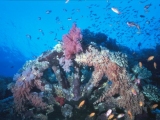 A better assessment of the threats to coral reefs along with improved management will give corals a much higher chance of survival in the face of warming oceans, says IUCN's latest report.
“We already know that climate change is destroying coral reefs through warming waters that cause coral bleaching and through acidifying oceans that hinders coral skeleton growth. We also know that if we want to save these beautiful living entities we must do something about it immediately,” says Gabriel Grimsditch, IUCN Corals Expert.
The report, Resilience Assessment of Coral Reefs - Rapid assessment protocol for coral reefs, focusing on coral bleaching and thermal stress, shows that the amount of damage done to corals depends not only on the rate and extent of climate change, but also on the ability of coral reefs to cope with change. This report outlines a protocol that defines basic resilience indicators that can be quantified using rapid assessment methods.
The need for quick results for measuring coral reef resilience is becoming increasingly acute, especially in the developing world. It is crucial to develop monitoring and assessment protocols to build an understanding of bleaching resistance and resilience indicators for application in management, and to determine how Marine Protected Area management actions can influence resilience and resistance.
"Research assessment for coral reefs builds our understanding of past management actions in maintaining the resilience of coral reefs, and helps managers combat the effects of climate change,” says Carl Gustaf Lundin, Head of IUCN’s Global Marine Programme. “Greater investment must be made in using research findings for adaptive management.”
“The story of coral reefs is particularly powerful and compelling, being one of the first ecosystems to clearly show climate change impacts, and being well-understood, highly visible and charismatic,” adds Lundin. “As a result, increasing our knowledge base of resilience-based science, management and policy for coral reefs has broader value for other ecological and human systems globally.”
“Findings from coral reefs should be more efficiently incorporated into the United Nations’ climate change negotiations in Copenhagen in December.”
IUCN, the International Union for Conservation of Nature, is the world’s oldest and largest global environmental network - a democratic membership union with more than 1,000 government and non-government member organisations, and almost 11,000 volunteer scientists in more than 160 countries.
Read the report: Resilience Assessment of Coral Reefs - Rapid assessment protocol for coral reefs
What do you think of this news item? Join a discussion.
Labels: coral, coral reef, SCUBA News
Tuesday, March 24, 2009
Deep-sea corals live thousands of years
 Deep-sea corals are found on hard substrates on seamounts and continental margins worldwide at depths of 300 to around 3000 m. Deep-sea coral communities are hotspots of living things, both in terms of numbers and diversity of species. They provide critical habitat for fish and invertebrates.
 According to research published this week in the Proceedings of the National Academy of Sciences, newly applied radiocarbon dating of the deep water corals Gerardia and Leiopathes species show that their growth rates are extremely low, and that individual colonies live for thousands of years. The longest-lived specimens were Leiopathes species (black corals) at 4265 years old.
The coral specimens were collected with submersibles off the coast of Hawaii. The authors measured the age of the corals' proteinaceous skeleton and found that the corals grew much more slowly than previous dating techniques had shown.
The management and conservation of deep-sea coral communities is challenged by their commercial harvest for the jewellery trade and damage caused by deep-water fishing practices.
The scientists conclude that in light of the corals' unusual longevity, we need to better understand their ecology and relationship with other bottom-dwelling creatures before forming a coherent international conservation strategy for these important deep-sea habitat-forming species.
Black Corals
Leiopathes black corals have a dark skeleton, after which they are named. The black skeleton forms irregularly branching, tree-like structures. Gorgonian-like, the skeleton is covered with polyps. Leiopathes corals are listed on Appendix II of the Convention on International Trade in Endangered Species (CITES), which means that they are not necessarily now threatened with extinction now but that may become so unless trade is closely controlled. Gerardia species are sometimes known as False Black Corals. Not all of these are deep sea: colonies are found in the Mediterranean between 50 and 80 m.
Journal References:
E. Brendan Roark, Thomas P. Guilderson, Robert B. Dunbar, Stewart J. Fallon, and David A. Mucciarone. Extreme longevity in proteinaceous deep-sea corals. PNAS 2009 : 0810875106v1-pnas.0810875106.
E. Brendan Roark, Thomas P. Guilderson, Robert B. Dunbar and B. Lynn Ingram. Radiocarbon-based ages and growth rates of
Hawaiian deep-sea corals. MARINE ECOLOGY PROGRESS SERIES, Vol. 327: 1–14, 2006
-
What do you think of this news item? Join a discussion.
Labels: coral, research, SCUBA News
Thursday, December 18, 2008
Fifth of corals dead: only emission cuts can save the rest, says IUCN
 The world has lost 19 percent of its coral reefs, according to the 2008 global update of the world’s reef status.
The report, released by the Global Coral Reef Monitoring Network, shows if current trends in carbon dioxide emissions continue, many of the remaining reefs may be lost over the next 20 to 40 years. This will have alarming consequences for some 500 million people who depend on coral reefs for their livelihoods.
Climate change is considered the biggest threat to coral reefs today. The main climate threats, such as increasing sea surface temperatures and seawater acidification, are being exacerbated by other threats including overfishing, pollution and invasive species.
“If nothing changes, we are looking at a doubling of atmospheric carbon dioxide in less than 50 years,” says Carl Gustaf Lundin, Head of the IUCN Global Marine Programme, one of the organizations behind the Global Coral Reef Monitoring Network. “As this carbon is absorbed, the oceans will become more acidic, which is seriously damaging a wide range of marine life from corals to plankton communities and from lobsters to seagrasses.”
Encouragingly, 45 percent of the world’s reefs are currently healthy. Another sign of hope is the ability of some corals to recover after major bleaching events, caused by warming waters, and to adapt to climate change threats.
However, the report shows that, globally, the downward trend of recent years has not been reversed. Major threats in the last four years, including the Indian Ocean tsunami, more occurrences of bleaching, outbreaks of coral diseases and ever-heavier human pressures, have slowed or reversed recovery of some coral reefs after the 1998 mass bleaching event.
“The report details the strong scientific consensus that climate change must be limited to the absolute minimum. If nothing is done to substantially cut emissions, we could effectively lose coral reefs as we know them, with major coral extinctions,” says Clive Wilkinson, Coordinator of the Global Coral Reef Monitoring Network.
Corals have a higher chance of survival in times of climate change if other stress factors related to human activity are minimized. Well-managed marine protected areas can also boost the health of coral reefs, but proper enforcement is difficult, especially in remote areas where the most pristine reefs are found.
What do you think of this news item? Start a discussion.
Labels: coral, coral reef, environment
Friday, September 19, 2008
Reef Search Finds Hundreds of New Species
The expeditions, affiliated with the global Census of Marine Life, help mark the International Year of the Reef and included the systematic scientific inventory of spectacular soft corals.
The discoveries were made at Lizard and Heron Islands (part of the Great Barrier Reef), and Ningaloo Reef in northwestern Australia. The found about 300 soft coral species, up to half of them thought to be new to science; dozens of small crustacean species -- and potentially one or more families of species – likewise thought unknown to science; The beautiful, rare Cassiopeia jellyfish, photographed upside down on the ocean
floor, tentacles waving in the water column -- a posture that enables symbiotic
algae living in its tentacles to capture sunlight for photosynthesis.
Preparing for future discoveries, the divers pegged several layered plastic structures – likened to empty doll houses – for marine life to colonize on the ocean floor at Lizard and Heron Islands. Creatures that move into these Autonomous Reef Monitoring Structures (ARMS), which provide shelter designed to appeal to a variety of sea life, will be collected over the next one to three years.
"Corals face threats ranging from ocean acidification, pollution, and warming to overfishing and starfish outbreaks," says Dr. Ian Poiner, Chief Executive Officer of the Australian Institute of Marine Science (AIMS), which led the research. "Only by establishing a baseline of biodiversity and following through with later censuses can people know the impact of those threats and find clues to mitigate them."
Ningaloo Reef appears to be the least biodiverse of the three sites studied, which may be related to its comparative isolation from other reef systems.
Understanding these biodiversity gradients and the influence of connectivity will help scientists predict reef biodiversity worldwide.
Expeditions to the same three sites will be repeated annually over the next three years to continue their inventory and measure impacts of climate change and other processes over time.
The addition of perhaps as many as 150 new species to the global inventory of soft corals is a major addition to the knowledge of this group which, despite its high distribution worldwide, remains one of the most poorly understood groups.
The scientists' studies also included seaweeds, urchins, and lace corals. More formally known as Bryozoans, lace coral colonies consist of asexually budded (and therefore genetically identical) individuals. Colonies form large intricate structures which bear no resemblance to the structure of the individual.
The Census of Marine Life (www.coml.org) is a global network of researchers in more than 80 nations engaged in a 10-year initiative to assess and explain the diversity, distribution, and abundance of marine life in the oceans – past, present, and future. The network will release the first Census of Marine Life in 2010.
What do you think of this news item? Start a discussion.
Bookmark with: del.icio.us | Digg | Newsvine | NowPublic | Reddit
|
 Slashdot It! | Facebook | StumbleUpon
 --

Subscribe to SCUBA News (ISSN 1476-8011) for more news, articles, diving reports, reviews and marine creature of the month.
(SCUBA News is published by SCUBA Travel once a month. Will will keep your e-mail address confidential and only use it to send you the monthly newsletter.)
Friday, July 11, 2008
One Third of Reef-Building Corals Face Extinction
 One third of reef-building corals around the world are threatened with extinction, according to the first-ever comprehensive global assessment to determine their conservation status. The study findings were published yesterday by Science Express.
Leading coral experts joined forces with the Global Marine Species Assessment (GMSA) – a joint initiative of the International Union for Conservation of Nature (IUCN) and Conservation International (CI) – to apply the IUCN Red List Categories and Criteria to this important group of marine species.
“The results of this study are very disconcerting,” stated Kent Carpenter, lead author of the Science article, GMSA Director, IUCN Species Programme. “When corals die off, so do the other plants and animals that depend on coral reefs for food and shelter, and this can lead to the collapse of entire ecosystems.”
Built over millions of years, coral reefs are home to more than 25 percent of marine species, making them the most biologically diverse of marine ecosystems. Corals produce reefs in shallow tropical and sub-tropical seas and have been shown to be highly sensitive to changes in their environment.
Researchers identified the main threats to corals as climate change and localized stresses resulting from destructive fishing, declining water quality from pollution, and the degradation of coastal habitats. Climate change causes rising water temperatures and more intense solar radiation, which lead to coral bleaching and disease often resulting in mass coral mortality.
Shallow water corals have a symbiotic relationship with algae called zooxanthellae, which live in their soft tissues and provide the coral with essential nutrients and energy from photosynthesis and are the reason why corals have such beautiful colors. Coral bleaching is the result of a stress response, such as increased water temperatures, whereby the algae are expelled from the tissues, hence the term “bleaching.” Corals that have been bleached are weaker and more prone to attack from disease. Scientists believe that increased coral disease also is linked to higher sea temperatures and an increase in run-off pollution and sediments from the land.
Researchers predict that ocean acidification will be another serious threat facing coral reefs. As oceans absorb increasing amounts of carbon dioxide from the atmosphere, water acidity increases and pH decreases, severely impacting corals’ ability to build their skeletons that form the foundation of reefs.
The 39 scientists who co-authored this study agree that if rising sea surface temperatures continue to cause increased frequency of bleaching and disease events, many corals may not have enough time to replenish themselves and this could lead to extinctions.
“These results show that as a group, reef-building corals are more at risk of extinction than all terrestrial groups, apart from amphibians, and are the most vulnerable to the effects of climate change,” said Roger McManus, CI’s vice president for marine programs. “The loss of the corals will have profound implications for millions of people who depend on coral reefs for their livelihoods.”
Coral reefs harbor fish and other marine resources important for coastal communities. They also help protect coastal towns and other near-shore habitats from severe erosion and flooding caused by tropical storms.
Staghorn (Acroporid) corals face the highest risk of extinction, with 52 percent of species listed in a threatened category. The Caribbean region has the highest number of highly threatened corals (Endangered and Critically Endangered), including the iconic elkhorn coral (Acropora palmata) which is listed as Critically Endangered. The high biodiversity “Coral Triangle” in the western Pacific’s Indo-Malay-Philippine Archipelago has the highest proportions of Vulnerable and Near-Threatened species in the Indo-Pacific, largely resulting from the high concentration of people living in many parts of the region.
Corals from the genera Favia and Porites were found to be the least threatened due to their relatively higher resistance to bleaching and disease. In addition, 141 species lacked sufficient information to be fully assessed and were therefore listed as Data Deficient. However, researchers believe that many of these species would have been listed as threatened if more information were available.
The results emphasize the widespread plight of coral reefs and the urgent need to enact conservation measures. “We either reduce our CO2 emission now or many corals will be lost forever,” says Julia Marton-Lefèvre, IUCN Director General. “Improving water quality, global education and the adequate funding of local conservation practices also are essential to protect the foundation of beautiful and valuable coral reef ecosystems.”
Coral experts participated in three workshops to analyze data on 845 reef-building coral species, including population range and size, life history traits, susceptibility to threats, and estimates of regional coral cover loss.
The reef-building corals assessment is one group of a number of strategic global assessments of marine species the GMSA has been conducting since 2006 at Old Dominion University in Norfolk, Virginia. Other assessments are being conducted on seagrasses and mangroves that are also important habitat-forming species, all marine fishes, and other important keystone invertebrates. By 2012, the GMSA plans to complete its comprehensive first stage assessment of the threat of extinction for over 20,000 marine plants and animals, providing an essential baseline for conservation plans around the world, and tracking the extinction risk of marine species.
The results of the coral species assessment will be placed on the IUCN Red List of Threatened Species in October 2008. Currently, the assessments can be found at
http://www.sci.odu.edu/gmsa/about/corals.shtml
What do you think of this news item? Start a discussion.
Bookmark with: del.icio.us | Digg | Newsvine | NowPublic | Reddit
|
Slashdot It! | Facebook | StumbleUpon --
Subscribe to SCUBA News (ISSN 1476-8011) for more free news, articles, diving reports and marine life descriptions - http://www.scubatravel.co.uk/news.html
Labels: coral, coral reef, environment, marine biology, research
Friday, June 20, 2008
ROV Finds New Coral Species
 Researchers on the third-largest atoll in the world, the Saba Bank in the Netherlands Antilles, have discovered and collected two new species of soft corals (gorgonians) and documented severe anchor damage with the aid of a Remotely Operated Vehicle (ROV) from Seabotix. Experts from Texas A&M University-Corpus Christi, Universidad de los Andes in Colombia, and the Rosenstiel School of Marine and Atmospheric Science at the University of Miami collected 40 species of soft corals, seventeen of which were collected using the ROV.
The SeaBotix LBV200L is rated to 200m (656 ft.) and includes fiber optic video, LED lighting, and powerful brushless thrusters. An optional grabber arm was used to collect the deepest new soft coral species at 70 m (230 ft.), a depth that would be impractical to explore using conventional diving techniques. Shelley Lundvall, Project Coordinator for the Saba Bank project, said, “The LBV (ROV) has helped us explore the deeper areas of the bank that nobody has seen before. We have also been able to add to the species diversity of gorgonians found on the Saba Bank”.
The ultimate goal of the research is to receive official recognition of the Saba Bank as a Particularly Sensitive Sea Area (PSSA) from the International Maritime Organization (IMO) in order to regulate international shipping that occurs within the Exclusive Economic Zone of the Netherlands Antilles. A management plan is now being drafted with the goal of enforcing existing and new regulations to protect the incredible diversity of Saba Bank marine life.
Another discovery emphasised the importance of the PSSA designation: “One of the most dramatic moments was when we found an anchor and chain scar on the bottom...The ability to document the damage done by these large ships is critical in getting the Saba Bank designated as a Particularly Sensitive Sea Area”, commented Shelley.
The video of this significant damage, as well as the actual recovery of the soft corals can be seen at www.youtube.com/slundvall
What do you think of this news item? Start a discussion.
Bookmark with: del.icio.us | Digg | Newsvine | NowPublic | Reddit
|
Slashdot It! | Facebook | StumbleUpon --
Subscribe to SCUBA News (ISSN 1476-8011) for more free news, articles, diving reports and marine life descriptions - http://www.scubatravel.co.uk/news.html
Labels: coral, coral reef
Thursday, April 17, 2008
Bikini corals recover from atomic blast
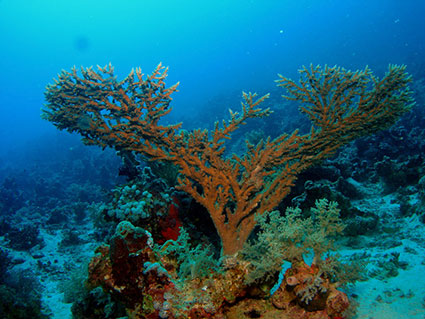 Half a century after the last earth-shattering atomic blast shook the Pacific atoll of Bikini, the corals are flourishing again. Some coral species, however, appear to be locally extinct.
These are the findings of a remarkable investigation by an international team of scientists from Australia, Germany, Italy, Hawaii and the Marshall Islands. The expedition examined the diversity and abundance of marine life in the atoll.
One of the most interesting aspects is that the team dived into the vast Bravo Crater left in 1954 by the most powerful American atom bomb ever exploded (15 megatonnes - a thousand times more powerful than the Hiroshima bomb). The Bravo bomb vapourised three islands, raised water temperatures to 55,000 degrees, shook islands 200 kilometers away and left a crater 2km wide and 73m deep.
After diving into the crater, Zoe Richards of the ARC Centre of Excellence for Coral Reef Studies and James Cook University says, “I didn’t know what to expect – some kind of moonscape perhaps. But it was incredible, huge matrices of branching Porites coral (up to 8 meters high) had established, creating thriving coral reef habitat. Throughout other parts of the lagoon it was awesome to see coral cover as high as 80 per cent and large tree-like branching coral formations with trunks 30cm thick. It was fascinating – I’ve never seen corals growing like trees outside of the Marshall Islands.
“The healthy condition of the coral at Bikini atoll today is proof of their resilience and ability to bounce back from massive disturbances, that is, if the reef is left undisturbed and there are healthy nearby reefs to source the recovery.”
However the research has also revealed a disturbingly high level of loss of coral species from the atoll. Compared with a famous study made before the atomic tests were carried out, the team established that 42 species were missing compared to the early 1950s. At least 28 of these species losses appear to be genuine local extinctions probably due to the 23 bombs that were exploded there from 1946-58, or the resulting radioactivity, increased nutrient levels and smothering from fine sediments.
“The missing corals are fragile lagoonal specialists – slender branching or leafy forms that you only find in the sheltered waters of a lagoon,” Zoe explains. While corals in general have shown resilience, Zoe adds that the coral biodiversity at Bikini Atoll has proven only partially resilient to the disturbances that have occurred there.
Extensive decontamination works have been carried out at Bikini atoll making it safe to visit, however local produce is unsafe to eat, and it is unlikely the Bikinian people will return to live on Bikini Atoll in the near future.
For comparison the team also dived on neighbouring Rongelap Atoll, where no atomic tests were carried out directly although the atoll was contaminated by radioactive ash from the Bravo Bomb and local inhabitants were also evacuated and for the most part, have not returned. The marine environment at this Atoll was found to be in a pristine condition.
The team thinks that Rongelap Atoll is potentially seeding Bikini’s recovery, because it is the second largest atoll in the world with a huge amount of coral reef diversity and biomass and lies upstream from Bikini.
Because of its incredible history and current undisturbed character Bikini Atoll is now part of a larger project to have northern Marshall Island Atolls World Heritage listed. The expedition served to illustrate the tragic history of the Bikinian people is not entirely reflected below the surface because the reefs of Bikini are recovering to present themselves as havens of abundance to the marine life of the Northern Pacific Ocean.
Journal Reference: Elsevier’s Marine Pollution Bulletin No. 56, March 2008 page 5-3-1-515.
Further Reading: ARC Centre of Excellence for Coral Reef Studies
What do you think of this news item? Start a discussion.
Bookmark with: del.icio.us | Digg | Newsvine | NowPublic | Reddit
|
Slashdot It! | Facebook | StumbleUpon --
Subscribe to SCUBA News (ISSN 1476-8011) for more free news, articles, diving reports and marine life descriptions - http://www.scubatravel.co.uk/news.html
Labels: coral, research, sealife
Wednesday, September 12, 2007
Countries urged to protect coldwater corals
Coldwater corals are long-lived animals that live along continental slopes, seamounts, and mid-ocean ridges. These corals are important parts of deep-sea ecosystems and provide habitat for other invertebrates and fishes. Coldwater corals can be damaged by fishing or other seafloor directed activities and may take centuries to grow back, if at all.
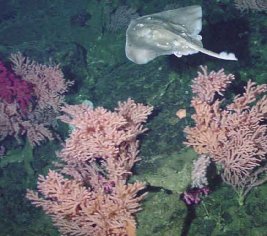
"Canada, Spain, Portugal and Russia are the countries that have the greatest potential to damage these globally important concentrations of corals," said Dr. Robert Rangeley, Vice President, Atlantic, WWF-Canada. "Their fleets are among the largest operating off Newfoundland and fish in and around the areas identified as hotspots. This also means they have the greatest opportunity to protect them."
"Our study mapped where corals are found, and identified areas where coral bycatch is highest for a variety of fisheries and gear types," said lead author of the study Dr. Evan Edinger. "Our research demonstrates that no matter what type of fishing gear is used, bottom-contact fishing in coral habitat damages corals. Therefore, it is very important that any areas established to protect corals exclude all bottom directed fishing activities." This research builds on a growing global movement to protect coldwater corals and seamounts. In 2006, the United Nations General Assembly called on fisheries management agencies like the Northwest Atlantic Fisheries Organization (NAFO) to implement vulnerable habitat protection measures by December 2008. In response, last year NAFO signalled their intent to protect seamount habitats.
The Report, Coldwater Corals off Newfoundland and Labrador: Distribution and Fisheries Impacts may be downloaded at: http://wwf.ca/coral
What do you think of this news item? Start a discussion.
Bookmark with: del.icio.us | Digg | Newsvine | NowPublic | Reddit
|
Slashdot It! | Facebook | StumbleUpon --
Subscribe to SCUBA News (ISSN 1476-8011) for more free news, articles, diving reports and marine life descriptions - http://www.scubatravel.co.uk/news.html
Labels: coral, environment, marine biology, research
Tuesday, August 14, 2007
Coral Reefs are Disappearing faster than Rainforests
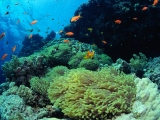 The rate and extent of coral loss are greater than expected, American researchers have found. And the reduction of coral rapidly causes a decline in the abundance and diversity of reef fish.
The estimated annual rate of coral cover loss in the Caribbean between 1977 and 2001 was approximately 1.5%, with the greatest decline occurring during the 1980s. In contrast, the estimated net annual loss of global humid tropical rainforest was only 0.4% from 1990–1997. Additionally, the patterns of coral reef degradation are very different from rainforest loss in that nearly all reefs have been affected; there are virtually no remaining pristine reefs and very few with coral cover close to the historical average.
Remarkably, in 2003, only 4% of the 390 surveyed Indo-Pacific reefs had coral cover greater than 50% and only 2% had cover greater than 60%. In contrast, cover was over 50% on nearly a third of the reefs surveyed between 1980 and 1983.
Despite the well-documented effects of several causes of mass coral mortality, there is substantial evidence that coral communities remain resilient, often recovering in ten to thirty years after major disturbances. However, such “recovery,” loosely defined as a return to pre-disturbance coral cover, often does not mean a return to original coral species composition because the recovery of slow-growing species can take centuries.
The general absence of quantitative data on reef health has led to several misconceptions about the causes, patterns, and best remedies for global coral decline. For example, in 2003, coral cover on the Great Barrier Reef (GBR), considered the “best-managed” and “one of the most ‘pristine’ coral reefs in the world”, was not significantly greater than on reefs in the Philippines and other subregions that are often thought to be highly threatened and poorly managed.
Additionally, based on the impression that Hawaiian reefs were “far further down the trajectory of decline” [than reefs in the Caribbean and Australia] a recent essay argued for a total overhaul of U.S. coral reef management policy. But Bruno and Sellig's analysis suggests that coral cover in the main Hawaiian islands, including frequently visited reefs close to urban and tourism centers, appears to have been as high as GBR cover over the last two decades.
The study highlights the urgent need for conservation policies to restore coral reefs and the ecosystem services they provide, estimated to be worth $23,100–$270,000 km−2 year−1. The researchers say halting and reversing coral loss will require actions across a range of scales including local restoration and conservation of herbivores that facilitate coral recruitment, and the reduction of fishing practices that directly kill corals, the implementation of regional land use practices that reduce sedimentation and nutrient pollution, and the institution of global policies to reduce anthropogenic ocean warming and acidification.
Source: Bruno JF, Selig ER (2007) Regional Decline of Coral Cover in the Indo-Pacific: Timing, Extent, and Subregional Comparisons. PLoS ONE 2(8): e711. doi:10.1371/journal.pone.0000711
What do you think of this news item? Start a discussion.
Bookmark with: del.icio.us | Digg | Newsvine | NowPublic | Reddit
--
Subscribe to SCUBA News (ISSN 1476-8011) for more free news, articles, diving reports and marine life descriptions - http://www.scubatravel.co.uk/news.html
Labels: coral, environment
Thursday, July 19, 2007
Creature of the Month: Table Coral, Acropora species
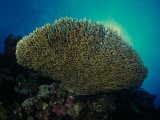 Table coral has a short, stout stem attached by a spreading base. Branches arise from the top of the stem and spread in a horizontal rather than a vertical direction, often fusing together. The closely set and interlocking branches form a roughly circular plate sometimes two or three metres in diameter.
Acropora species are among the fastest growing corals, with upward growth between 10 and 20 cm per year. This is achieved through their porous skeleton and the branched habit that will re-establish themselves readily when damaged.
In the Caribbean, Acropora colonies are brown or yellowish in colour, often with white tips. In the Indo-Pacific, though, they are among the most brightly coloured corals on the reef. Acropora is an important reef-building coral and often dominates shallow areas. It provides shelter for a variety of small fishes and other animals.
Table corals are the most vulnerable to storm damage. Their broad, flat top supported by a narrow stalk makes them more susceptable to strong wave forces than bushy or mounded corals. However, severe storms, by themselves, would do not pose a large threat to reefs. Young colonies do not form tables and the Acropora corals grow and mature quickly.
What do you think of this news item? Start a discussion.
Bookmark with: del.icio.us | Digg | Newsvine | NowPublic | Reddit
--
Subscribe to SCUBA News (ISSN 1476-8011) for more free news, articles, diving reports and marine life descriptions - http://www.scubatravel.co.uk/news.html
Labels: coral, marine biology
Sunday, June 24, 2007
Caribbean Corals in Danger of Extinction
The study found that 10 percent of the Caribbean’s 62 reef-building corals were under threat, including staghorn and elkhorn corals. These used to be the most prominent species but are now candidates to be listed as Critically Endangered on the IUCN Red List of Threatened Species.
A gathering of 23 scientists in Dominica analysed data on Western Tropical Atlantic corals, seagrasses, mangroves and algae, which are fundamental components of marine ecosystems providing food and shelter for numerous other organisms and local communities.
The threats to corals and other marine species include coastal pollution and human development; increased sedimentation in run-off water; thermal stress and heightened severity of hurricanes from climate change; and shifts in species dynamics due to over-fishing, according to the study. Scientists explained that the Caribbean has undergone the longest and most sustained impacts from human development since the colonization of the Americas.
Next to corals, mangroves appear to be the hardest hit. Mangrove cover in the region has declined by 42% over the past 25 years, with two of the eight mangrove species now considered Vulnerable to extinction and two more in Near Threatened status.
“Mangroves protect shorelines, shelter fish, and filter pollution,” said Aaron Ellison of Harvard University. “The Caribbean was blessed with an abundance of these useful plants, but the consensus of this workshop is that mangroves are in trouble everywhere and need to be protected and restored,” he added. Mangrove forests are being cut down to make way for coastal housing, tourism, and aquaculture development.
The scientists noted that some healthy Caribbean coral reefs still exist in well-managed marine protected areas such as Bonaire Marine Park in the Netherlands Antilles. Direct human impacts are reduced in these areas allowing most corals to thrive; however, thermal stress from global warming affects all corals in the Caribbean and must be reversed if these refuges of Caribbean beauty are to survive, they added.
Further Reading: Conservation International
What do you think of this news item? Start a discussion.
Bookmark with: del.icio.us | Digg | Newsvine | NowPublic | Reddit
--
Subscribe to SCUBA News (ISSN 1476-8011) for more free news, articles, diving reports and marine life descriptions - http://www.scubatravel.co.uk/news.html
Labels: Caribbean, coral, environment, SCUBA Travel
Friday, May 25, 2007
Review: On-Line Coral Reef Course
Coral Reef Ecosystem & Food Web Course
$59.55
http://www.beautifuloceans.com/
This new course for divers discusses the coral reef ecosystem and food web. It illustrates its points using animals and plants found in and around coral reefs. For instance, the Caribbean Reef Shark is discussed as a top-level, active, predator. The authors manage to pack loads of information on their example species into a small space, without the prose becoming uninteresting. And even when I thought I knew lots about a subject they managed to surprise me. For instance, did you know that sponges may be able to live to over 1000 years old?
Although much of the information applies to coral reefs throughout the world, the example species are found in the Caribbean.
By the end of the course its authors hope that you will have learnt to appreciate all life on coral reefs from the tiniest phytoplankton to the shark. You will also have learnt how each creature is interconnected with the others.
The course is available on-line, where you work through at your own pace at your computer. It includes videos of animal behaviour and interactive quizzes. You can also take the course at selected dive schools in the Caribbean.
The course materials are well written, with many interesting asides. The Manual, in pdf format, is 119 pages long. It has a comprehensive index and is lavishly illustrated with a high-quality photograph or diagram on nearly every page.
We are delighted to be able to offer our newsletter subscribers the chance to win the course. Subscribe at http://www.scubatravel.co.uk/news.html then send us an e-mail with "Beautiful Oceans" as the subject line. Closing date is 11 June. Your e-mail entries will not be passed to any other company unless you win, in which case Beautiful Oceans will be in touch with you.
For more information visit http://www.beautifuloceans.com/
Bookmark with: del.icio.us | Digg | Newsvine | NowPublic | Reddit
What do you think of this news item? Start a discussion.
--
Subscribe to SCUBA News (ISSN 1476-8011) for more free news, articles, diving reports and marine life descriptions - http://www.scubatravel.co.uk/news.html
Labels: Caribbean, coral, environment, marine biology, sealife
Thursday, May 17, 2007
Healthy Coral Reefs Hit Hard by Warmer Temperatures
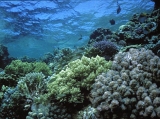 Coral disease outbreaks have struck the healthiest sections of Australia's Great Barrier Reef, where for the first time researchers have conclusively linked disease severity and ocean temperature. Close living quarters among coral may make it easy for infection to spread, researchers have found.
"With this study, speculation about the impacts of global warming on the spread of infectious diseases among susceptible marine species has been brought to an end," said Don Rice, director of the National Science Foundation (NSF) Chemical Oceanography Program, which funded the research through the joint NSF-National Institutes of Health Ecology of Infectious Diseases Program.
For 6 years, the international research team, led by University of North Carolina (UNC)-Chapel Hill, tracked an infection called white syndrome in 48 reefs along more than 900 miles (1,500 kilometers) of Australia's coastline.
The colorful coral colonies that attract visitors to the Great Barrier Reef live atop a limestone scaffolding built from the calcium carbonate secretions of each tiny coral, or polyp. While polyps provide the framework, coral's vivid hues come from symbiotic single-celled algae that live in the polyps. The algae supply much of the food coral need to survive.
When disease or stressful environmental conditions strike a coral colony, the polyps expel their algae. This algae loss makes the coral appear pale.
"We're left with a big question. Can corals and other marine species successfully adapt or evolve, when faced with such change?" Rice said.
Understanding the causes of disease outbreaks will help ecologists protect reef-building corals, which support commercial marine species and buffer low-lying coastal areas.
"More diseases are infecting more coral species every year, leading to the global loss of reef-building corals and the decline of other important species dependent on reefs," said lead study author John Bruno at UNC. "We've long suspected climate change is driving disease outbreaks. Our results suggest that warmer temperatures are increasing the severity of disease in the ocean."
What do you think of this news item? Start a discussion.
--
Subscribe to SCUBA News (ISSN 1476-8011) for more free news, articles, diving reports and marine life descriptions - http://www.scubatravel.co.uk/news.html
Labels: Australia, coral, coral reef, environment, marine biology
Friday, December 29, 2006
Butterflyfish Decline with Coral
Researchers from the ARC Centre of Excellence for Coral Reef Studies (CoECRS) have tracked a dramatic decline in the numbers of coral-feeding fish, after a reef was destroyed by bleaching caused by high sea temperatures.
Dr Morgan Pratchett, a senior research fellow at CoECRS, and colleagues spent five years charting a collapse in numbers of coral-feeding butterflyfish on reefs affected by severe coral bleaching.
“The evidence suggests that climate change is already hitting certain fish populations – and this could have an adverse effect on industries like tourism,” he warns. “People come to the reef expecting to see colourful fishes.”
“The impact of coral bleaching is most obvious in fish which feed specifically on corals, as do most butterflyfishes. It is not yet clear what knock-on effects this may have on populations of mixed feeders or predatory fish like coral trout - and hence on the fishing industry or recreational angling.”
Their research results indicate that the impacts of coral bleaching can be more far-reaching and last longer than previously thought.
Dr Pratchett said the researchers had also noted a steady decline in body condition of the coral-dependent butterflyfish at Trunk reef on the Central Great Barrier Reef following bleaching events in 2000-2002.
This suggested that the fish were gradually starving to death and the decline in numbers indicated they had also failed to breed in the months and years following the destruction of their reef.
“It looks as if they didn’t move elsewhere, but stayed where they were and starved. Fish can be very territorial and it may be hard for refugee fish which have lost their reef to relocate elsewhere, because the locals will try to keep them out.”
Coral bleaching is caused by high water temperatures which cause the corals to shed their symbiotic bacteria and die. Bleaching events have been noted worldwide and appear to be on the increase as the earth warms, leading to accelerated degradation of reefs.
There have been several major bleaching events affecting corals along Australia’s Great Barrier Reef in recent years, the worst being in 2002, Dr Pratchett said.
More than 30% of coral reefs throughout the world are already severely degraded and corals on 60% may be lost by 2030 due significantly to bleaching as the climate warms, research by CoECRS scientists indicates.
“Ours and other studies indicate that when coral bleaching occurs affecting up to 10 per cent of the reef, it affects the abundance of nearly two thirds of the fish species on that reef.
“As the damage rises to 20 per cent and above, there is a marked decline in the richness of fish species on the reef – and the losses can last for years.
“However we are also confident that, if the corals recover, the coral-feeding fishes will come back,” Dr Pratchett says. “That’s the encouraging news for managers, tourism operators and visitors alike.”
What do you think of this news item? Start a discussion.
--
Subscribe to SCUBA News (ISSN 1476-8011) for more free news, articles, diving reports and marine life descriptions - http://www.scubatravel.co.uk/news.html
Labels: coral, environment, sealife
Thursday, December 14, 2006
Human Activity Seriously Damaging Coral Reef
The analysis is the first to determine the origin and volume of sediment and pollution that run off agricultural lands, via the region's vast river networks, into the neighboring Gulf of Honduras and Caribbean Sea.
"As humans have altered the landscape, an increasing amount of sediment and nutrients are reaching coastal waters and the Mesoamerican Barrier Reef itself," said Lauretta Burke, a senior coastal ecosystem expert at WRI and co-author of the study. "Our analysis shows that pollution from farms in Honduras can inadvertently damage the entire Mesoamerican reef, which provides an important source of revenue from tourism and fisheries."
Along with more than 80 percent of sediment, more than half of all nutrients (both nitrogen and phosphorous) originate in Honduras.
Guatemala was identified as a source of about one-sixth of all sediments and about one-quarter of all nitrogen and phosphorous entering coastal waters along the reef.
Compared to the other countries, relatively minor percentages of the regional sediment load come from Belize and the Yucatan Peninsula in Mexico. Belize contributes between 10 to 15 percent of nutrients and Mexico is estimated to contribute about 5 percent of the nutrients from all modeled watersheds.
Of the 400 watersheds in the region, the Ulua watershed in Honduras was found to be the largest contributor of sediment, nitrogen, and phosphorous. Other large rivers found to be significant contributors of sediment and nutrients are the Patuca (in Honduras), Motagua (in Guatemala and Honduras), Aguan (in Honduras), Dulce (in Guatemala), Belize (in Belize), and Tinto o Negro (in Honduras).
Under land-use scenarios which favour free markets and little policy regarding the environment, nutrient delivery is likely to increase by about 10 percent by 2025, while sediment delivery might increase by 13 percent or more.
If environmental policies that favour sustainable development are implemented, nutrient and sediment delivery are likely to be reduced by at least 5% from current levels, promoting recovery of degraded corals.

What do you think of this news item? Start a discussion.
--
Subscribe to SCUBA News (ISSN 1476-8011) for more free news, articles, diving reports and marine life descriptions - http://www.scubatravel.co.uk/news.html
Labels: coral, environment, sealife
Wednesday, October 18, 2006
Madagascar Coral Reef Massively Damaged
A number of coral bleaching events – where rising sea temperatures cause corals to turn white and ultimately die – have struck Madagascar's southwest coast over the years, the worst being in 1998 and 2000.
Previous surveys have found that Madagascar's northern coasts escaped damage from these global bleaching events, thanks to cool water currents from nearby deep ocean areas.
Madagascar's southwestern coasts, however, have not been so lucky.
In areas where scientists found damaged coral reefs, algae had started to take over the dead reefs, and fish diversity was lower than in areas with healthy corals.
Madagascars coastal waters are believed to have some of the highest diversity of marine species in the Indian Ocean.
During the survey, led by the conservation groups Blue Ventures and the Wildlife Conservation Society and funded by Conservation International, scientists recorded 386 species of fish along the southwestern reefs of the Andavadoaka region. Of these, 20 species had never before been recorded for Madagascar and one may be a new discovery to science. The survey team believes that further research may reveal as many as 529 fish species living among these reefs.
The survey team also recorded 164 species of hard coral, including 19 that were previously unknown to inhabit Madagascar’s waters. Another four coral species could not be identified and may be new to science.
The total number of coral species recorded was significantly lower than those previously found along Madagascar’s northwestern coasts. These lower numbers are believed to be a direct result of the mass bleaching events of 1998 and 2000.
“Global warming is a major threat to the world’s coral reefs, but there are other more direct threats as well that can be more immediately addressed,” said Alasdair Harris, research director of Blue Ventures. “Destructive fishing practices and nutrient runoff from villages and resorts are also killing these incredible underwater systems that provide vital resources for the people of Madagascar.”
Overfishing and nutrient runoff have decreased the number of plant-eating species living within the coral reefs, allowing damaging algae to grow on corals already stressed by rising sea temperatures. By increasing the number of herbivores, damaging algae can be controlled and coral settlement and growth can increase.
Harris said it is urgent that government agencies, NGOs and local villages work together to create marine protected areas to prevent overfishing and other activities that are damaging coral reefs and the many marine resources they provide. The development of alternative and sustainable incomes – such as ecotourism – will also assist local villages that are currently dependent on these dwindling marine resources.
But the survey team also found some signs of hope. Scientists discovered several small reefs with corals that appeared to be resilient to rising sea temperatures and could ultimately be used to reseed damaged reefs. These resilient reefs may also provide valuable information about how to protect corals from future damage.
The entire report can be found at http://www.blueventures.org/
--
Subscribe to SCUBA News (ISSN 1476-8011) for more free news, articles, diving reports and marine life descriptions - http://www.scubatravel.co.uk/news.html
Labels: coral, environment, Madagascar, SCUBA Travel
Monday, September 18, 2006
Most Corals Can't Survive Global Warming
Many corals rely on their symbiotic algae for survival. Under stress (such as higher temperatures) these algae are expelled, resulting in coral bleaching. It has previously been reported that corals may recover from coral bleaching by changing the type of algae they host. However, a new research study shows that less than a quarter of coral species can do this.The corals which have been seen to survive raised temperatures are those that host several types of algae. These are in the minority. A review of the published data, by Tamar L. Goulet of the University of Mississippi, shows that only 23% of corals fall into this category. She looked at 43 studies of 442 species of coral.
If global climate change continues, she concludes that many symbiotic coral species may not survive.
Source: Marine Ecology Progress Series, 321:1-7, 2006.
--
Subscribe to SCUBA News (ISSN 1476-8011) for more free news, articles, diving reports and marine life descriptions - http://www.scubatravel.co.uk/news.html
Labels: coral, environment, sealife
Wednesday, April 12, 2006
NASA Helps Researchers Diagnose Coral Bleaching at Great Barrier Reef
An international team of scientists are working at a rapid pace to study environmental conditions behind the fast-acting and widespread coral bleaching currently plaguing Australia's Great Barrier Reef. NASA's satellite data supply scientists with near-real-time sea surface temperature and ocean colour data to give them faster than ever insight into the impact coral bleaching can have on global ecology.
Australia's Great Barrier Reef is a massive marine habitat system made up of 2,900 reefs spanning over 600 continental islands.
Scientists use ocean temperatures and ocean "colour" as indicators of what is happening with coral. Coral is very temperature sensitive. Ocean "colour," or the concentration of chlorophyll in ocean plants, is important because it informs scientists about changes in the ocean's biological productivity. NASA satellites capture both temperature and colour data from their space-based view of the coral reefs.
Bleaching occurs when warmer than tolerable temperatures force corals to cast out the tiny algae that help the coral thrive and give them their color. Without these algae, the corals turn white and eventually die, if the condition persists for too long.
NASA offer a free, Internet-based data distribution system that enables researchers around the globe to customize requests and receive ocean color data and sea surface temperature data.
--
Subscribe to SCUBA News (ISSN 1476-8011) for more free news, articles, diving reports and marine life descriptions - http://www.scubatravel.co.uk/news.html
Labels: coral
